The industry is telling itself a schedule it has never once hit.

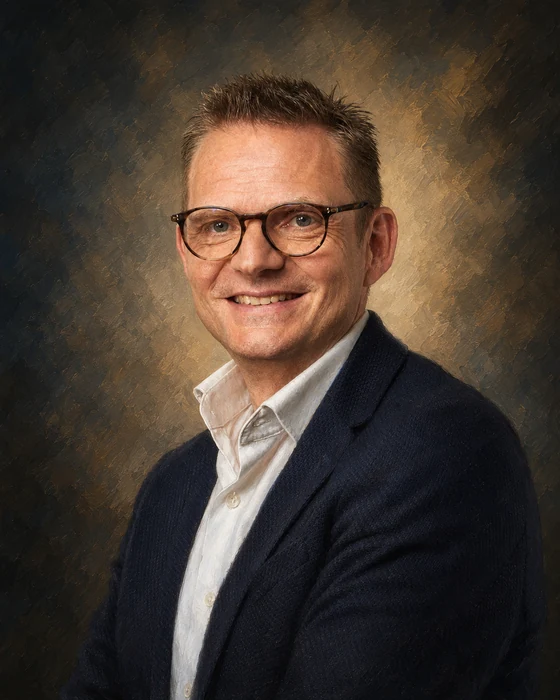
Six years running global data-centre delivery at Microsoft, then design and construction engineering at Meta. Ask most people what stops a data centre and you get power, planning or politics. He asks who is buying it.

Doug Mouton
Doug Mouton
Senior Advisor, Global Infrastructure Partners · a BlackRock company
Questions put20
Claims tested04
Board seatRiot Platforms
AttributionNamed, by request
Two routes out of mining

Two routes out of bitcoin mining, and what each one costs.

Mouton has sat on the board of Riot Platforms since 12 February 2025, which puts him inside one of the two conversion strategies now visible in the market. Riot owns energised power and is placing it slowly. Nscale, out of the same industry in the same year, raised against contracts and built fast. Both routes are live, and they price risk in opposite places.

Conversion monitor · live file as of Aug 2026ENT-A04-ROUTES-2026.08

He built a gigawatt a year. He is not worried about the concrete.

Ask most people what stops an American data centre and you get power, or planning, or politics. Ask the man who ran delivery at Microsoft and he asks who is buying it.

Doug Mouton spent six years running global data-centre delivery at Microsoft, latterly as Vice President, and then led design and construction engineering at Meta. He has since advised infrastructure capital deploying into the build, and sits on the board of a listed miner converting to compute.

He is unusual among contributors to this report in how little he trades on optimism. He is the one arguing that the flagship programme has no demonstrated buyer, that more than half of projects miss their delivery rate, that the pain will land in the private markets where his clients sit, and that building your own power plant is a tactic rather than a strategy, while advising an energy developer.

His answers run across three chapters. The delivery method is in Conditions. The American read is in the United States. Southeast Asia is held for a separate piece. What follows is the whole conversation.

Four truths

Four things thirty years in delivery teaches you.

Not positions taken to be provocative, and not arguments with anyone. Four things a career of building at scale taught him, including the ones that are awkward to say out loud.

Career file · Microsoft, Meta, GIP as of Aug 2026ENT-A04-FOUR-2026.08
01on the flagship

Yes it can be built. The question is who buys it.

Asked whether ten gigawatts is deliverable he says yes without hesitation, because delivery is the part he knows. Asked whether there is a credible offtake behind ten gigawatts, he says he does not believe there is. He reads Oracle stepping back and Microsoft stepping in as a tell rather than a detail, and he puts the schedule in the hands of the customers rather than the builders.

Thirty years on the delivery side
02on the trade

More than half of projects miss their rate.

The cost is wrong, the delivery time is wrong, and entitlements rarely arrive at the pace the programme assumed. He does not frame this as incompetence. He frames it as the operating condition of the industry, and one it has not learned to price. He includes his own trade in that, and himself in the trade.

Including his own projects
03at Microsoft

A competitor built it for half, so he copied them.

Running global delivery he could see a rival building the same product for materially less: on his recollection around fifteen million dollars a megawatt against roughly seven. His response was to work out what they were doing and follow it. He describes pioneering as something you earn after you have caught up.

Learned by watching, then copying
04on power

Building your own power plant is a tactic, not a strategy.

He treats behind-the-meter generation as a way to route around a poor grid rather than a position in itself. It carries fuel exposure, an operating burden, and a skill set most operators do not have. He is describing what an operator should weigh, from the delivery side rather than the ownership side.

From the delivery side, not the deal side

Reported in the desk’s house style from his written submission of twenty answers · the AES transaction referenced in 04 was announced on 2 March 2026, after he submitted · he does not speak for GIP and nothing here is attributed to it

Checked against the record

Four claims, against the record.

Four positions from his submission, each checked against sources with no stake in them. Where the record supports him it is said plainly, and where his framing runs ahead of what the data establishes, that is said too.

Claims monitor · live file as of Aug 2026ENT-A04-DASH-2026.08

The interview roll.

Twenty questions, in the order they were asked. His answers are set out as attributed summary rather than quotation: the desk’s record of this conversation is notes, not a transcript, and smoothing notes inside quotation marks would make his words ours. Direct quotation follows his review.

Attributed summary · not quotation

Some organisations are developing fast and some are steady, and the split is about appetite rather than capability. He points at the neocloud end as the aggressive pole: bullish, well backed, convinced they can deliver, with capital looking for somewhere to go and describing these as the hottest investments they have seen.

His own frame is longer. These are assets measured in years, not in ninety and one-hundred-and-eighty day reporting cycles, and most of the anxiety in the market comes from grading them on the wrong clock.

Attributed summary · not quotation

Where a lab or a neocloud can acquire a clear path to sizeable land alongside a commitment of chips and power, in the same transaction. That combination is rare, and the hyperscalers are vacuuming up what exists of it.

Attributed summary · not quotation

The hyperscalers have the wallet and are running capital expenditure budgets at a scale nobody has seen. They are beating earnings quarter after quarter and being punished for it, because the spend being presented has no clearly articulated return path. He is blunt that the numbers are frightening on their face.

He does not read that as the market being wrong about the assets. He reads it as the market grading a decade-long build on a quarterly clock.

Attributed summary · not quotation

Both, and bigger than either. The equity side is looking for steadier gains than this build offers, and sentiment has run hot and then cooled after the major rises. But his conclusion is that the public markets will be fine and the pain, when it arrives, lands in private markets.

Attributed summary · not quotation

Because that is where the leaning-in happened. Developers who committed cash for turbines and speculative capacity to induce a hyperscaler to lease are carrying that exposure directly. Winners and losers, in his framing, are separated by how far each one leaned.

Attributed summary · not quotation

Around seventy per cent of it runs through third-party data centres and about thirty per cent into self-build. Two thirds of the spend is servers. So a large share of what reads as hyperscaler construction is in fact a private-markets story, with third-party developers carrying the delivery risk on most of the footprint.

Attributed summary · not quotation

He says there is nothing in what he sees that suggests it is not. The question is not whether demand arrives but who captures it, and he expects clear winners and losers along the way.

Attributed summary · not quotation

Not the grid. The training campuses built away from the hyperscale doctrine of regional alignment. A site built for one frontier training run, remote from the demand it would otherwise serve, struggles to find a use case once that run is finished. That is the asset he would not want to own.

Attributed summary · not quotation

A necessity born of a legacy problem, and the same one Ireland hit. There is nothing strategic about building a power plant. It competes with your own project for labour and materials, it carries its own operational delivery risks, and the time and cost of doing it cleanly are still too great. It is a tactic to offset a poor grid.

Attributed summary · not quotation

It has gone asymptotic. The gains have flattened, the footprint per unit is broadly where it was, and further movement is approaching zero. His description of the current position is moving without making progress.

Attributed summary · not quotation

He answers with history. The United States built out its grid between the 1920s and the 1960s without settled standards, in the middle of an argument between Edison and Tesla over whether current should be direct or alternating. It got done, with far less to work with, and the utility that came out of it lifted the country. His point is that the industry keeps relitigating whether this build is possible when the historical answer is already on the record, and that the bigger point is being lost.

Attributed summary · not quotation

That a data centre is not a hard project. It is a building that covers servers and the infrastructure around them, and it does not need to be fancy. He expects the next ten years to standardise the design, make cost predictable and bring operators to parity. What some still treat as special is on its way to ordinary.

At Microsoft and Amazon a decade ago the numbers were lean. Then migration to air cooling brought cost per megawatt down to around six million dollars, and liquid cooling for AI density has taken it back up to roughly twelve. Within one generation he puts Microsoft at about fifteen million a megawatt against AWS at about seven.

His explanation is the building rather than the procurement: too much of it, and a balance between safety and cost that had drifted toward spending the problem away. What he did was simplify, standardise and modularise. He also cautions owners that transferring delivery to a contractor does not transfer the risk: without oversight and a held design intent the cost arrives anyway. And in that period roughly a third of the gear had to be pre-purchased before a contractor would start at all.

Attributed summary · not quotation

Ambitious. Oracle declined to keep going and Microsoft came in, and he reads Oracle’s position as weakness. Can it be delivered? Yes. Is there a credible offtake for ten gigawatts? He does not think so. The schedule depends on what the customers do.

He adds a comparison the industry would not expect: look at the crypto miners, who defined grit.

Attributed summary · not quotation

He points at operators who moved fastest by simply not waiting: entitlements skipped, permits treated as an afterthought, servers rolled in. It is fast. Whether it is sustainable, and whether it produces long-term infrastructure, is a different question.

Attributed summary · not quotation

In the United States it largely did not, through that period. Data centres were welcomed. The friction he actually met was European and specific.

In the Netherlands, generator emissions counted against a national ceiling shared with agriculture, so every megawatt of data-centre emissions arrived as a subtraction from farmers. In Ireland the difficulty was the power crunch and a harder interface with the utility, not the public. In rural Sweden the issue was simply that beautiful places had never seen anything like it.

What worked there was not jobs and tax. His team stood up a council that directed social investment into the community: district heating from waste heat, upgrades to local infrastructure, capital that stayed after the build crew left.

His read on the American map follows. Tier-one sites are now dense with both population and data centres, and Phoenix is the same. Latency will increasingly be solved with fibre. So go to the neighbourhoods that want you, and he names Louisiana.

Attributed summary · not quotation

He supports Global Infrastructure Partners, a BlackRock company, which has taken a stake in TrueIDC in Thailand, and he has seen strong growth there and across Southeast Asia. He describes it as a greenfield opportunity in markets that are still developing, where the capital is attractive precisely because the market is not yet large and the field is not yet crowded. Both China and the United States are moving to take advantage of it.

Attributed summary · not quotation

Compute and storage, and now inference arriving from Chinese hyperscalers selling cloud into Thailand and the wider region. Two superpowers, in the same market, with deep roots on both sides and limited capacity to fight over. He puts demand letters from utilities in Thailand at around six gigawatts.

Attributed summary · not quotation

The cost of a data centre and the time to deliver it. Entitlements rarely come at the pace you want. On his estimate more than half of projects do not deliver at their intended rate, and he calls that self-delusion.

Attributed summary · not quotation

Supporting Global Infrastructure Partners, a BlackRock company, through a large capital deployment: a robust pipeline of deals, diligence on the way in, and coaching teams once they close. He also sits on the board of a listed bitcoin miner moving into compute and cloud, which he thinks is a route for the data-centre industry to learn from an industry it has tended to dismiss.

Attributed summary · not quotation

A statistical analysis of exposure hours in hazardous conditions. If the United States doubles or triples capacity in the next five years, that work is done by new entrants operating at unfamiliar scale, with a great many more people on site. His concern is not the labour-supply number. It is the safety and the mental wellbeing of the people who will be asked to build at that rate.

The Playbook

What GIP has bought, and what it is looking for.

Mouton is a Senior Advisor to Global Infrastructure Partners, the infrastructure arm BlackRock acquired in 2024. Five transactions in two years show what the platform is actually buying: the operator, the vehicle, the estate, the contractor and the generation. Read together they describe a thesis about where the returns in this build sit.

GIP file · committed capital as of Aug 2026ENT-A04-PB-2026.08
What the platform has committed since he joined it Hover or tap any band. Enterprise values as stated by the parties, in USD billions. The AIP figure is a fundraising target, not deployed capital.
40
33.4
12.5
5
30
Tap a band The capital, decomposed Roughly ninety billion dollars of enterprise value committed to compute and the power under it, in under two years, by the platform he advises.

Where to go next.

What is his, and what is ours.

In conversation with Doug Mouton, 30 July 2026. Twenty questions were put and all twenty were answered.

The desk’s record of this conversation is notes rather than a transcript. Every answer above is therefore attributed summary, and no sentence appears inside quotation marks. That is deliberate: smoothing a note into a quotation would make his words ours. Direct quotation will be added after he has reviewed this edition.

Figures are his own recollection and estimate unless separately graded, and the cost-per-megawatt numbers describe the period he was running delivery rather than the market today. They are the figures in this edition most worth putting to a second source. Where his answers resolve into something the desk can test, those are set out as graded files in Conditions and the United States, each alongside independently sourced evidence he was not shown.

He advises capital deploying into this build at Global Infrastructure Partners, a BlackRock company, which is worth knowing while reading him on whether the build continues. It is stated here rather than left for the reader to discover.