[Name to come]
[Placeholder] A short clip will sit here – one quotable observation on the supply chain, with the transcript below.
Transcript
[Placeholder transcript. Replace with the speaker’s own words once the clip is recorded.]
The United States runs the largest stock of data-centre capacity on earth and the AI labs driving global demand. The 500 billion dollar Stargate programme opened 2025. The question is no longer money or ambition but power, land and local consent – and a cold economic war with China over the chips the whole stack runs on.
The United States is not a next hotspot; it is the incumbent. It hosts the largest stock of data-centre capacity on earth and the AI labs driving global demand. What is new is not whether America builds, but whether it can land the build it has already financed – against a power grid, a planning system and a politics that were never designed for gigawatt campuses.
The flagship is Stargate: a programme of up to 500 billion dollars, targeting 10 gigawatts by 2029, announced in January 2025 by OpenAI, SoftBank and Oracle, already rising on real land at Abilene, Texas. Capital is the easy part. Private credit from Blue Owl, sovereign money via MGX, and hyperscaler balance sheets underwrite gigawatt campuses before they break ground.
What bends an American data-centre plan is not the money. It is power – nuclear restarts at Three Mile Island for Microsoft, Talen’s reactor deal for Amazon, Entergy building roughly 7.5 GW of new gas across ten plants for Meta’s Hyperion – and consent: by 2025, analysts counted on the order of 156 billion dollars of projects blocked or stalled by local opposition across some forty states. The build has met the neighbours.
Over all of it sits the cold economic war with China: export controls on the most advanced chips, and a contest to set the world’s AI rails. Four instruments read the United States: The Chess Game, the move-by-move US–China contest for compute; The Unrest Tracker on the build meeting its neighbours; The story of Stargate on the ground; and The Brief on the flagship campuses and the counties that decide them. Every modelled figure is tagged, and every projection is framed as such.
The trade war that opened in 2018 with tariffs on steel and soybeans has hardened into something colder and more structural: a contest over who owns and operates the world’s digital infrastructure, the chips, clouds, cables, data centres and the rules that govern them. Read it as a game between two players. The United States moves with controls, capital and alliances; China moves with self-reliance, integrated infrastructure and upstream materials. Step through the board move by move, then model the endgame.
From the 2018 tariffs to the 2026 compute race, step through the US–China contest for the world’s digital infrastructure, one move at a time.
An interactive model in four layers: what a chosen path does to the global compute race, where the capital and capacity concentrate, how stable the board and its supply lines are, and the move-by-move record behind it.
A directional Entelligencia model, not a forecast. Pick a path and an escalation level, then read four layers: what it does to the global compute race, who captures the investment, how stable the board and its supply lines are, and the move record. Figures are ranges and directions, not precise outcomes.
In the United States the bottleneck on compute is no longer capital or even power. It is consent. Across more than forty states, residents, county boards and courts have turned data centres into a live political fight over land, water, noise and who pays for the grid. This tracker maps where the resistance is, the instruments it uses, and the politicians lining up for and against. Figures are reported or modelled and contested where noted; representative visuals.
Each card is a place where a data-centre project ran into organised opposition, a moratorium, a water fight or a courtroom. Open any case for the detail.
Opposition rarely beats a hyperscaler on capital. It wins on procedure: the levers below are how a county turns a render into a negotiation.
Data-centre politics do not map cleanly onto left and right. A pro-build administration, a centre that wants investment with protection, and a populist left-right bloc that wants pauses now share the same arena. Positions are paraphrased from public statements and actions; no quotations are invented.
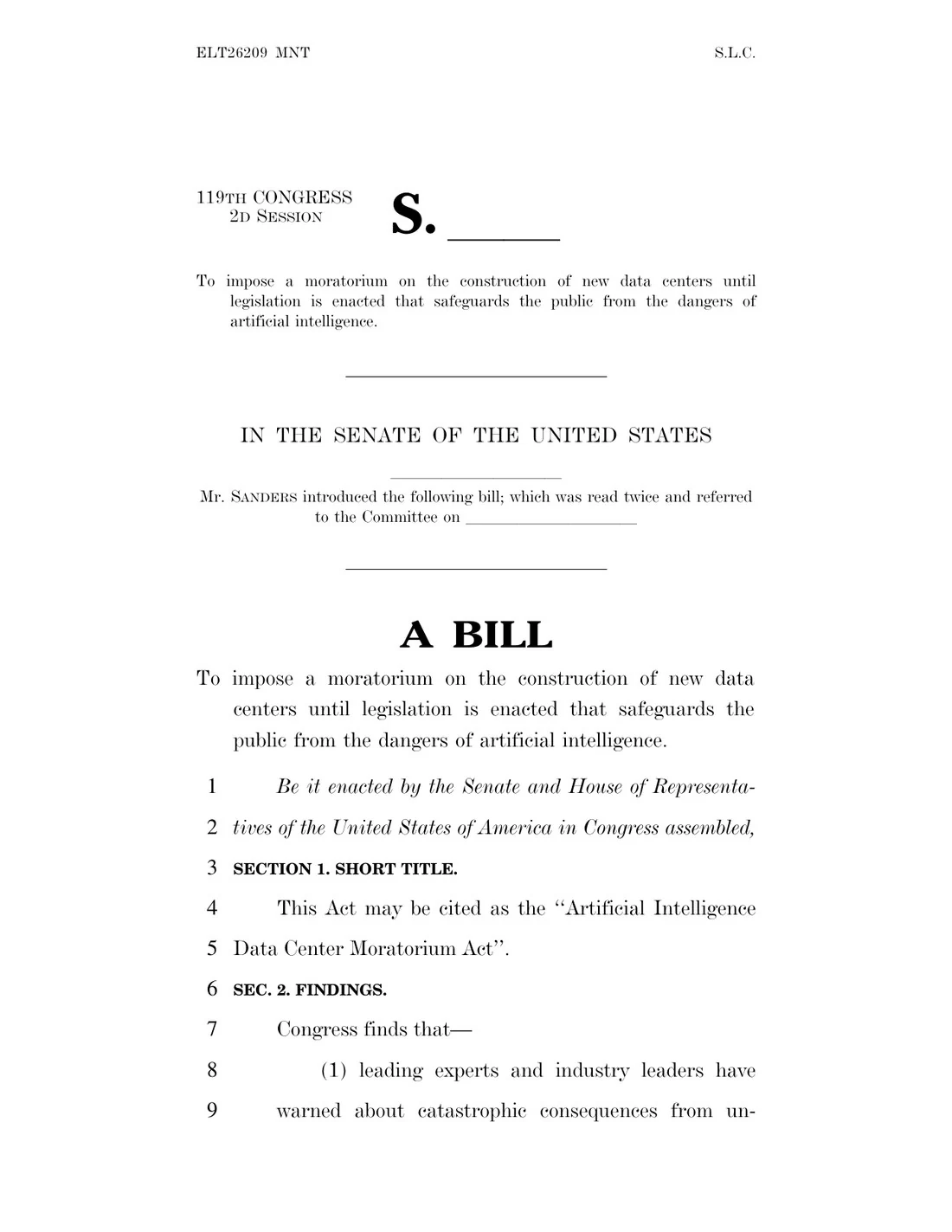
The Artificial Intelligence Data Center Moratorium Act, introduced in the US Senate by Bernie Sanders, would bar the construction or upgrading of large AI data centres until federal law guarantees product safety review, worker protection, and community power to approve or reject a campus, with reporting on water, energy and emissions. It is the maximal form of the pause stance: where a county moratorium buys a year, a federal moratorium would stop the build nationwide.
A representative read of where each instrument is adopted, active, proposed or absent across the six tracked fronts. Below, the same states plotted by opposition intensity against how pro-build state policy is.
| State / front | Moratoria | Setbacks | Water limits | Special-use | Ratepayer |
|---|---|---|---|---|---|
Virginia Data Center Alley |
Active | Adopted | Proposed | Adopted | Active |
Pennsylvania PJM grid |
Adopted | Active | None | Active | Proposed |
Wisconsin Ballot front |
Proposed | Active | None | Adopted | Proposed |
California Suburban front |
Active | Adopted | Proposed | Adopted | None |
Nevada Water front |
Proposed | Active | Adopted | Active | None |
Utah Box Elder |
None | Proposed | Proposed | Adopted | None |
The United States can finance and power almost any amount of compute. What it cannot do, at least not quickly, is force a county to accept it. The opposition is now organised, bipartisan in its anger about power bills, and armed with instruments that work: a moratorium buys a year, a special-use permit buys conditions, a courtroom can void an entitlement outright. For operators and investors the lesson of 2025 and 2026 is that the binding diligence question has moved from can it be financed to will the community, the utility and the court allow it.
Sources: industry and press tallies of blocked and stalled projects (2025–2026); state utility-commission and legislative records; local reporting on township, county and ballot actions; public statements and actions by the named officials. Cases, figures and instrument readings are reported or modelled and should be re-verified before publication. Photography is representative editorial art, to be replaced with sourced imagery.
The number that opened 2025 was up to 500 billion dollars. The question this report keeps asking is the same one it asks everywhere: how much of that is announced, and how much is rising on real land, drawing real power, beside real communities. Here is where Stargate actually is – and the questions that travel with it.
On 21 January 2025, a day after the inauguration, OpenAI, SoftBank and Oracle stood beside the president to announce Stargate: a joint venture to build AI infrastructure in the United States, with SoftBank carrying financial responsibility and OpenAI running operations.
The framing was deliberately vast: up to 500 billion dollars over four years, with 100 billion said to be deploying immediately. MGX, Arm, Microsoft and NVIDIA were named as partners. Almost none of it existed yet on the ground.
The first real Stargate is in Abilene, Texas – the Lancium Clean Campus, built out by Crusoe and leased through Oracle to OpenAI. Buildings were energised across 2025 and reported partially live by September. A planned expansion of the flagship campus was shelved in March 2026, with Meta reported to be weighing the freed-up site.
The map is the gap between a press release and a permit. Tap the markers: one site is pouring concrete, one is in court, and five more are still names on a pipeline.
On the ground the first campus is real hardware: the Lancium Clean Campus, built out by Crusoe and leased through Oracle to OpenAI. Eight buildings are planned, with first halls energised across 2025 and reported partially live by September.
A press release is a sentence; this is a substation, a water line and a construction crew. It is also the exception – the one site where the money has already turned into steel.
In Saline Township, Related Digital’s 16 billion dollar campus – three buildings of roughly 550,000 square feet each, targeted for end of 2027 – won a 4 to 1 township board vote only after Related Digital sued over exclusionary zoning and the township settled. OpenAI and Oracle broke ground in June 2026.
The developer points to a closed-loop cooling design to limit water draw. The dispute is the pattern this report tracks everywhere: the deal clears the local body, and the community contests it after.
After the vote, residents took it to the street and to court. The placards are blunt – “Who’s paying for the power?” and “Keep Michigan pure” – and they name the real dispute. It is less about the buildings than about who carries the cost of the electricity and water the load will draw.
A gigawatt campus needs new generation and new transmission. Whether the bill for that lands on the hyperscaler or on every other ratepayer in the state is the question a township vote cannot settle.
Contested Source: WXYZ Detroit; local reporting, 2025. Photo: WXYZ, to be licensed.The cost question does not stay local. It moves to the state utility regulator – in this case the Michigan Public Service Commission – which rules on how the cost of new generation and transmission is allocated.
Bodies like it, across many states, are quietly becoming the decisive venue of the build-out. Whether data-centre load pays its own way or is socialised across ratepayers is settled here, in hearings most residents never see.
Verified Source: Michigan Public Service Commission records; reporting, 2025. Photo: MPSC, to be licensed.The honest answer is that the headline is a ceiling, not a balance sheet. Some of Stargate is contracted and under construction. Some is announced intent. Some is contested. Sort it for yourself.
By late 2025 the venture had named additional sites – Shackelford and Milam counties in Texas, Doña Ana County in New Mexico, Lordstown in Ohio, and a Wisconsin location – with a stated ambition past 7 gigawatts of capacity.
Each new dot is a rural county most of the country could not place on a map – a new grid interconnection, a new water question, and a new commission. The build is no longer a single campus; it is a national programme negotiating itself one jurisdiction at a time.
Stargate compresses a decade of infrastructure into a few years. That speed is the point – and the problem. Closed-loop cooling reduces but does not erase water demand. Gigawatt loads lean on gas turbines and strained grids. And every site asks a community to accept a national bet on local terms.
The numbers above are the announcement. The film below is the ground.
Source: Entelligencia analysis. Figures are status-banded above; treat the headline as a ceiling.Stargate’s gigawatts have to land somewhere. In this Sky News report, correspondents visit the heart of America’s data-centre boom – Northern Virginia’s “Data Center Alley”, the largest concentration of data centres on earth – where the build is colliding with the communities and the power grid around it. We feature it as a real-world counterpoint to the announcement above.
Featured third-party report. This Sky News broadcast is embedded under YouTube’s standard player and credited to its makers; it is not commissioned by or affiliated with Entelligencia, and is shown as editorial counterpoint to the chapter. Poster image is the video’s YouTube thumbnail. Confirm embedding permissions and credit before publication.
In the Gulf the render outruns the budget. In the United States the money is the easy part. Capital here is abundant and patient; what bends a data-centre render is the ground beneath it – the land, the megawatts, the water table and the county commission that has to vote yes. Scroll each track left to right: the projection resolves into what stands today, what private capital has financed, or what a court erased. Figures are reported or modelled and contested where noted.
In the United States the announced number is rarely the fiction; the financed build usually follows, and fast. The variable that decides whether a render becomes a building is local: an interconnection queue, a water table, a county commission, a courtroom. For an investor or operator the discipline is to separate the financed project from the permitted one. The capital is real and the demand is real, but the megawatt only becomes an asset once the grid, the county and the court all agree. The render is the marketing; consent is the gate.
Each spoke is one precondition, scored 0 to 10 for like-for-like reading – indicative editorial weighting, not a published index. Select any spoke or row to read the factor.
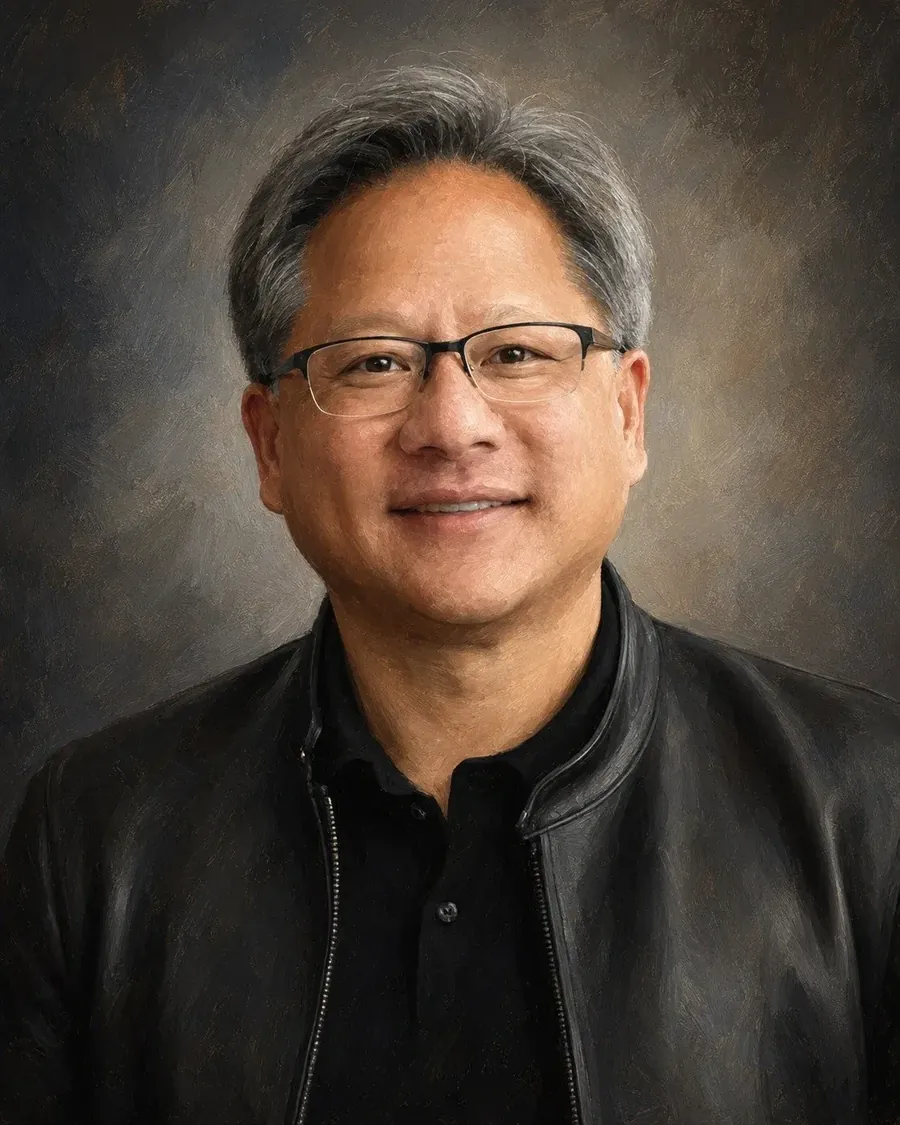
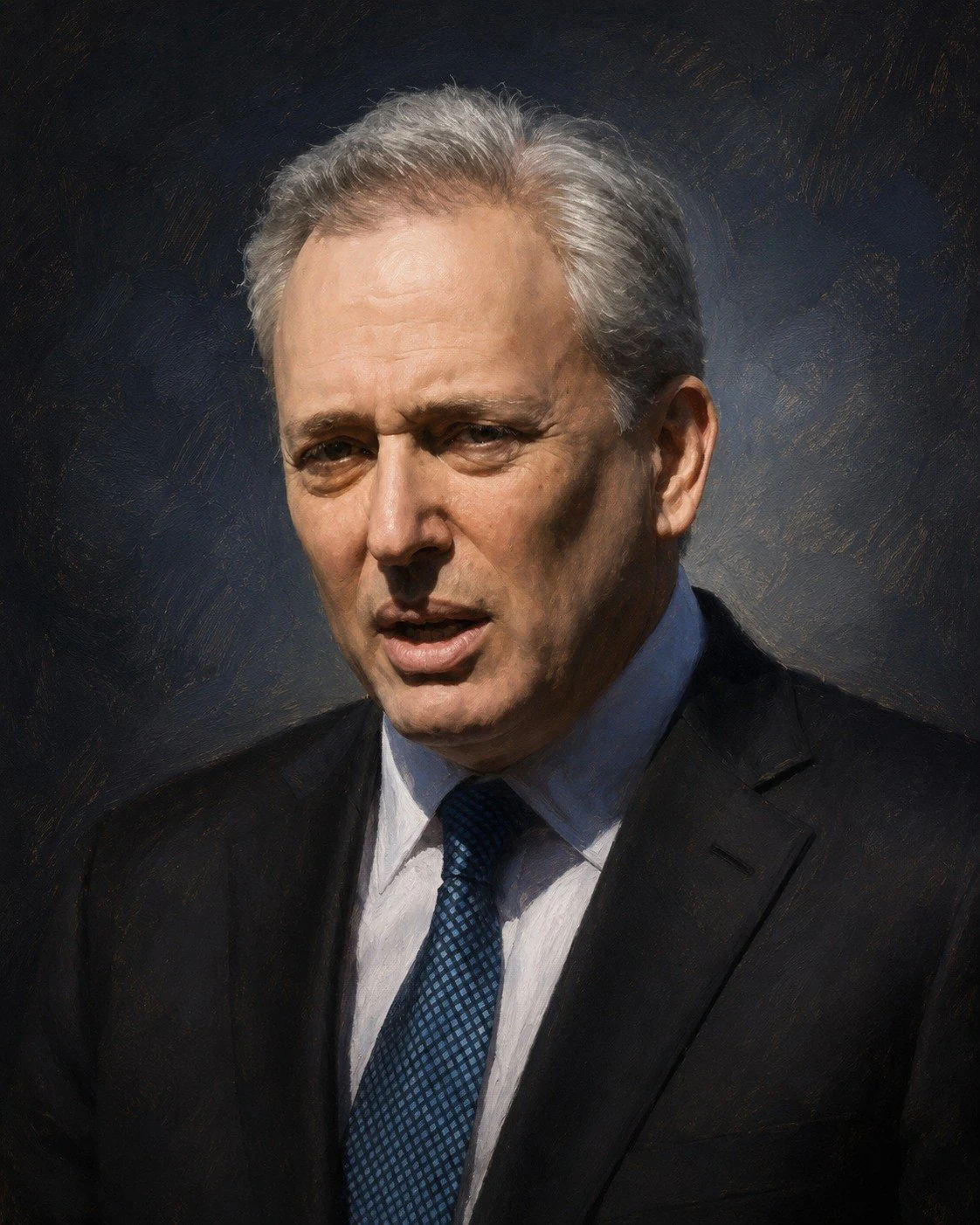
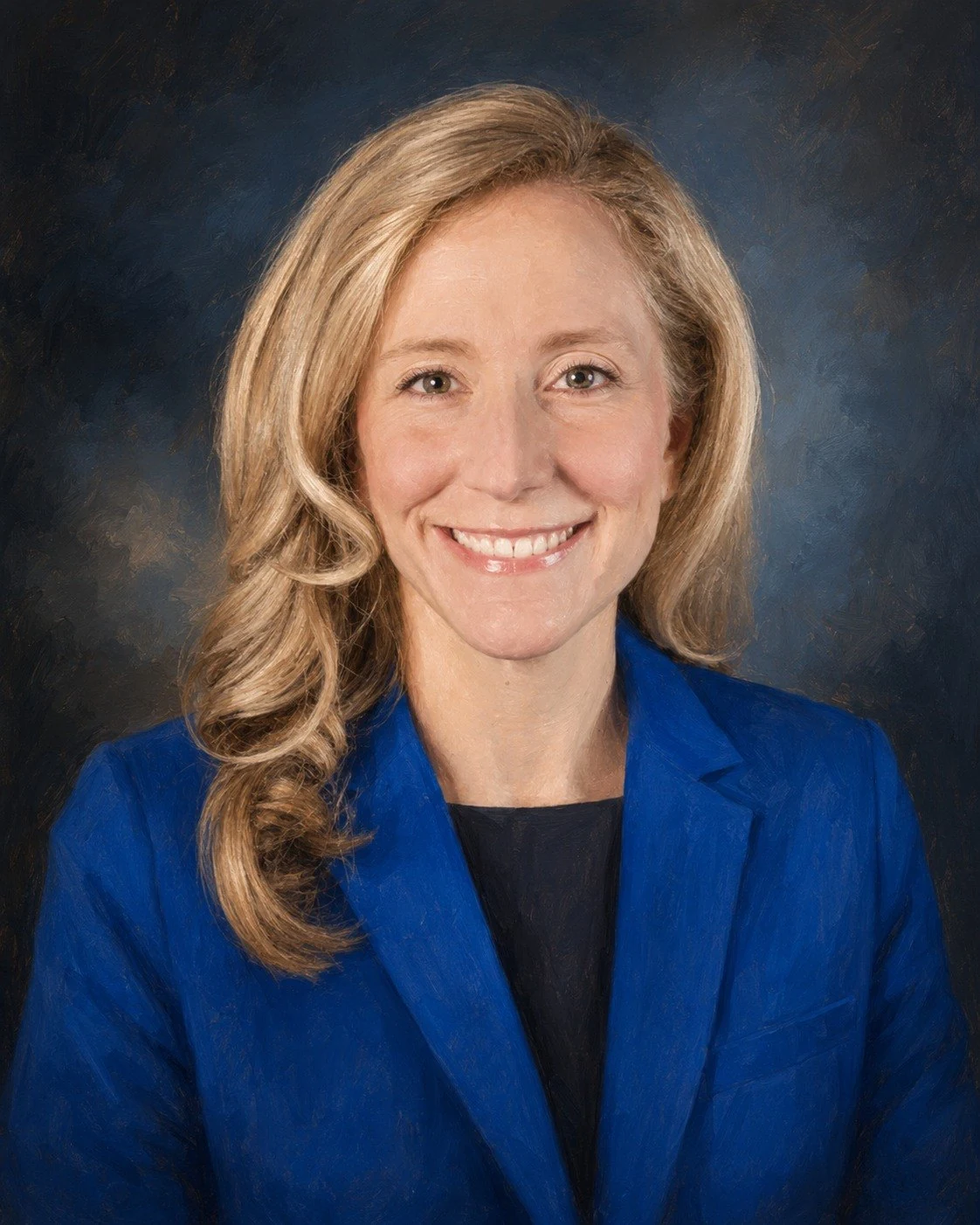
Five named figures across the AI-compute builders, the silicon chokepoint, federal policy and the state politics of cost and consent. Each card carries a public-record position, never an invented quote; named roles and figures should be re-verified against current company and government records before publication. Portraits are reference images and remain subject to licensing clearance before publication.


Capital sets the pace and is abundant: private credit and sovereign money underwrite gigawatt campuses before they are built. Suppliers and the power layer gate what can actually energise; operators and REITs raise and lease the halls; and the hyperscalers and AI labs anchor the demand the whole stack is sized against. The US signature is that the chain is deep and contested: many independent actors, a binding power constraint, and a local-consent gate the Gulf does not face.
05 tiers · 30 entitiesLogos identify the parties for evaluation only, not as an endorsement, and remain subject to each owner’s brand-usage rights before any sponsor or commercial use; names shown without a logo are indicative of the categories active across the US market. Connections are Entelligencia’s reading of public deal and partnership announcements, to be confirmed before publication.
Three industry voices on the supply chain, each opening a pop-out that can carry a voice clip, an interview, an opinion with exhibits, or a simple quote. Placeholder cards for now; real names, photos and content to follow.
[Placeholder] A short clip will sit here – one quotable observation on the supply chain, with the transcript below.
[Placeholder transcript. Replace with the speaker’s own words once the clip is recorded.]
[Placeholder] A short standfirst introducing the conversation and why this voice matters here.
[Placeholder] First question on the supply chain.
[Placeholder] Reply. Replace with the interview transcript.
[Placeholder] Follow-up question.
[Placeholder] Reply.
[Placeholder] Opening argument of the contributed piece.
[Placeholder] The point the exhibit is brought in to support.
[Placeholder] Closing line, and what it means for the read.
Placeholder module · voices, photos and content to be added chapter by chapter.
Operator by operator, county by county: what is financed, what is permitted, and what a court or community is disputing. Site visits, named interviews and the people-map of the market, held to one standard, that nothing is published until it is verified.
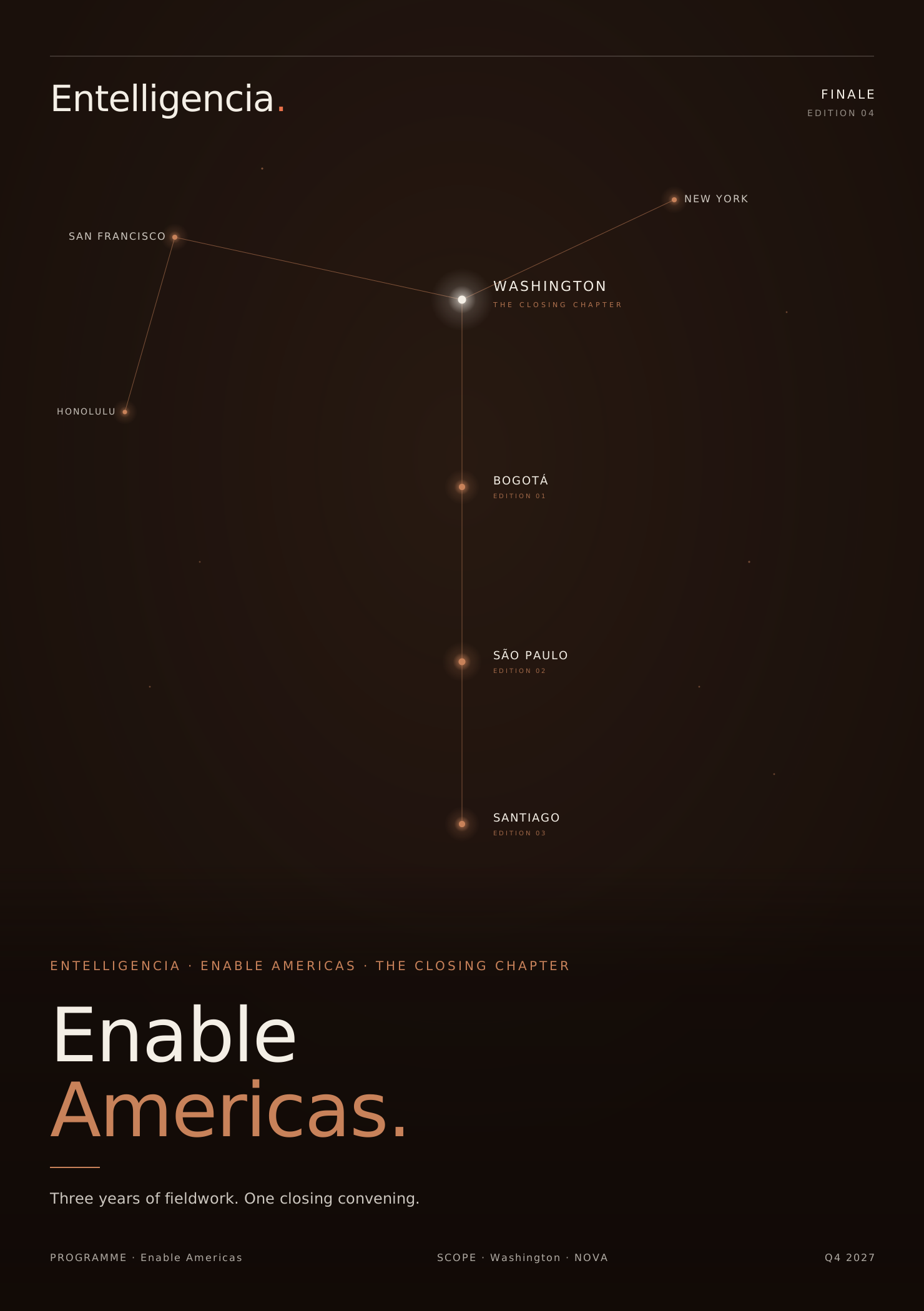
Each prior edition mapped one market end to end. Enable Americas draws them together, with the United States at the centre of the synthesis.