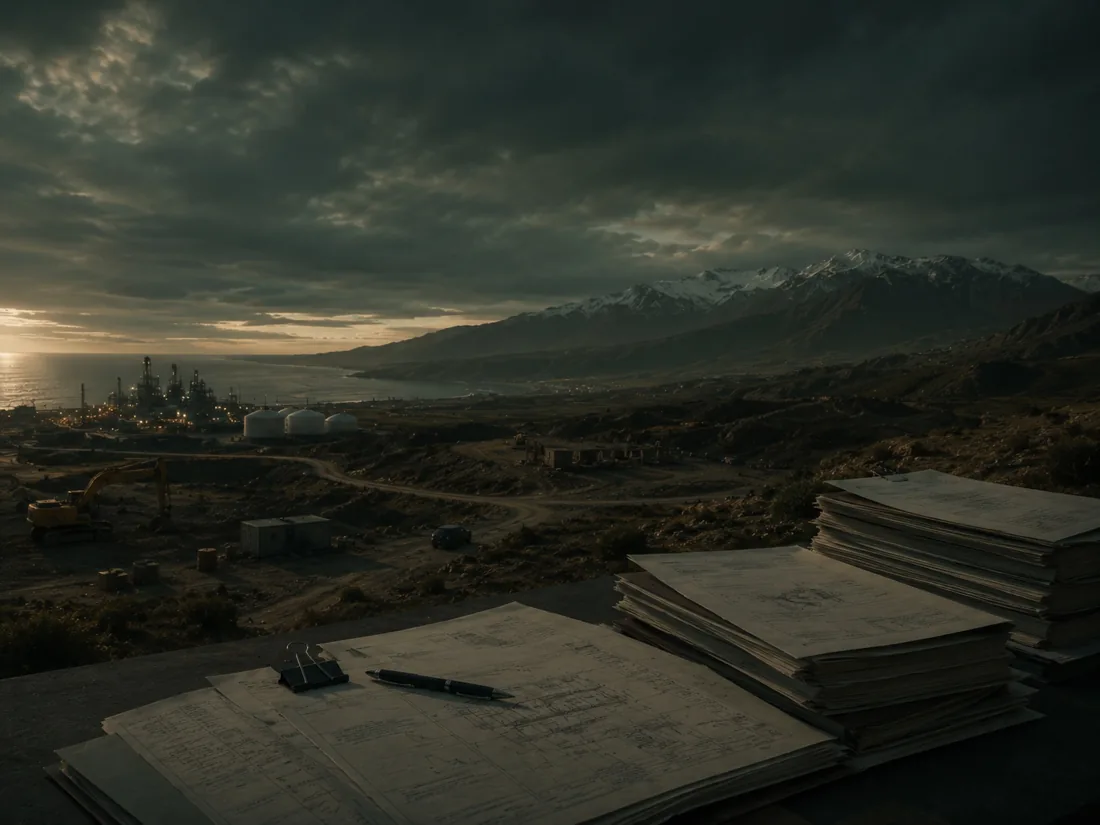
The grid is ready.
The licences are not.

The highest solar irradiance on earth, a two-thirds renewable grid, a new trans-Pacific cable: the technical case is the hemisphere's strongest. The missing piece is social licence, the right to use scarce water fifteen years into a drought, now decided by courts and communities.

Installed · Santiago H2 2025 279MW
Projected demand · 2032 2,360MW
Renewable installed capacity 63.9%
Binding constraint Social
licence
A note from Entelligencia
Chile in depth, in Enable Chile.
This chapter runs a little lighter than the others in the report, by design: Chile is covered in full depth in Enable Chile. This page sketches the picture; the flagship maps it, operator by operator, named interviews, the people of the market. Edition 02 of the Enable programme, the Pacific gateway chapter.
Convenings
Honolulu · Jan 2028The Pacific Room · PTC · Santiago · April 2028The Deployment
Analyst overview · 4 Aug 2026

What the Chile picture actually shows.

The technical case is the strongest in the hemisphere. The constraint is not technical at all.

Chile enters 2026 with advantages no other emerging market can assemble at once: the Atacama's solar irradiance, a grid already 63.9% renewable, direct access to the copper the buildout consumes, and a Pacific cable position about to deepen when the Humboldt system, the first direct Chile-to-Asia route, enters service. Santiago capacity rose from 182 MW to 279 MW across the second half of 2025, vacancy collapsed from 23.4% to 4.3%, and AWS, Microsoft and Google have together committed over USD 8 billion from 2025 forward, moving from scattered facilities to campuses of 30 to 50 MW. Analysts size the Chilean market near USD 773 million in 2024, rising toward USD 1.24 billion by 2030.

And yet the defining Chilean story of the last two years is not a groundbreaking. It is a court. In 2024 an environmental court partially reversed Google's permit for its USD 200 million Cerrillos campus after residents challenged a design that would have drawn 7.6 million litres of potable water a day from a strained Santiago aquifer; Google committed to redesign around air cooling. In February 2026 Chile's Environmental Evaluation Service went further, codifying dry and closed-loop cooling as the baseline for a favourable environmental resolution. The same guide sets hard entry triggers: a transmission line above 23 kV running more than 2 km pulls a project into mandatory review, as does backup generation above 3 MW. Environmental impact studies now run 12 to 18 months, with archaeological review capable of adding as much again. Wet cooling is, in effect, no longer a viable permitting path in central Chile.

The thesis for the chapter is this: Chile's binding constraint is not power, capital, connectivity, or land. It is social licence, the right to use water in a country fifteen years into drought, where roughly a third of environmental complaints over the past decade have touched indigenous territory. The country that should have everything is the case study for what happens when the engineering is ready and the consent is not. The operators who clear that bar, verified below, will define which share of the announced pipeline becomes real.

Entelligencia desk · South America · chapter 05 of 10
Now follow the story
At a glance · the index

Chile’s preconditions, scored.

Each spoke is one precondition, scored 0 to 10 for like-for-like reading – indicative editorial weighting, not a published index. Select any spoke or row to read the factor.

The story

The country that should
have everything.

Every precondition the AI buildout looks for, Chile already has. This is the story of the one it is still missing, told through the projects that announced, the court that intervened, and the rule that followed. Scroll to begin, and open the markers as you go.

Thirteen stages · scroll and click to explore
Chile's grid mix 63.9% RENEWABLE · 21.5 GW INSTALLED SOLAR 28% WIND · 15% HYDRO · 17% OTHER RENEWABLE · 4% THERMAL · 36% INSTALLED CAPACITY · INDICATIVE SHARES
The biggest projects · status
The Santiago cluster
More than USD 8 billion of hyperscaler capital lands in one metro. This is where it actually stands.
Microsoft Chile Central3 sites · live 2025Verified
AWS Chile regionUSD 4bn · H2 2026Verified
Ascenty SCL03 Quilicura16MW · live Sept 2025Verified
EdgeConneX ColinaSCL01/02 · 21MW liveVerified
ODATA Lampa / San BernardoST01/02 · approx 80MWVerified
Ascenty SCL04 + SCL05150MW · announcedAnnounced
Google Cerrillos (2nd site)stalled · air-cooled redesignContested
Exploratory
Why not just build in the desert?
The Atacama has the sun, but not the demand or the transmission. The fibre, the people and the customers are 1,300 km south in Santiago. The grid, not the irradiance, decides where a campus goes.
1,300kmAtacama to Santiago demand
Contested · the trigger
7.6 million litres a day
Court filings showed Google's Cerrillos campus would draw potable water from the city aquifer for cooling. Roughly seven billion litres a year, from one campus.
80,000People that volume would supply for a year
Context
Fifteen years dry
Central Chile is more than a decade into a mega-drought that forced water-rationing plans for Santiago in 2022. Water is not an accounting line here. It is the thing the city is already short of.
2022Santiago's first formal water-rationing plan
Why it binds
One table, many straws
A data centre, a mine, a farm and a city draw from the same falling table. That overlap turns a cooling decision into a political one, and a permit now has to answer for it.
Feb 2026Dry-cooling codified as the permitting baseline
The deeper tension
The same water, twice promised
Chile mines roughly a quarter of the world's copper, the metal the buildout itself runs on, and copper is thirsty too. Data centres are the newest claimant on a watershed mining, farming and cities already contest.
25%Of world copper, from the same dry watersheds
Verified · in delivery
The first direct Chile-Asia route
The Humboldt subsea system is the first cable to connect South America directly to the Asia-Pacific. It lands at Valparaiso, 70 km from Santiago, which becomes the natural Western-hemisphere terminus for trans-Pacific traffic, the one advantage no permit can revoke.
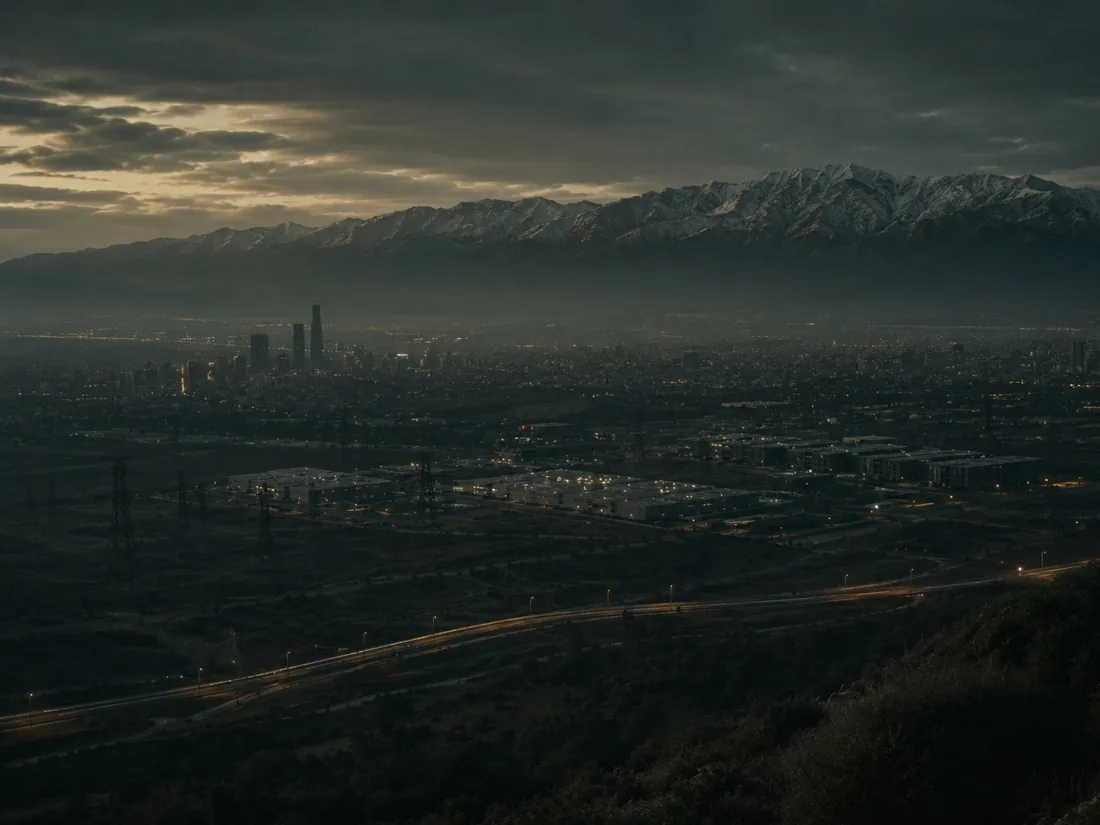
Atacama to Santiago · establishing shot
Stage 01 / 13 · The opening

A grid built for this moment.

From the Andes to the Pacific, Chile reads like a checklist drawn up by an AI infrastructure committee. Snow-fed peaks above a renewable grid. A capital wired to subsea cable. Copper in the ground. Sun that does not quit.

For a few years, the world's largest cloud operators agreed. Then the story turned, not on engineering, but on consent.

Stage 02 / 13 · The demand centre

It all comes back to Santiago.

Forty percent of Chileans, the fibre, the customers and the courts sit under one snow-capped skyline. Wherever the desert's sun is, the buildout is decided here.

Stage 03 / 13 · The technical case

The strongest preconditions in the hemisphere.

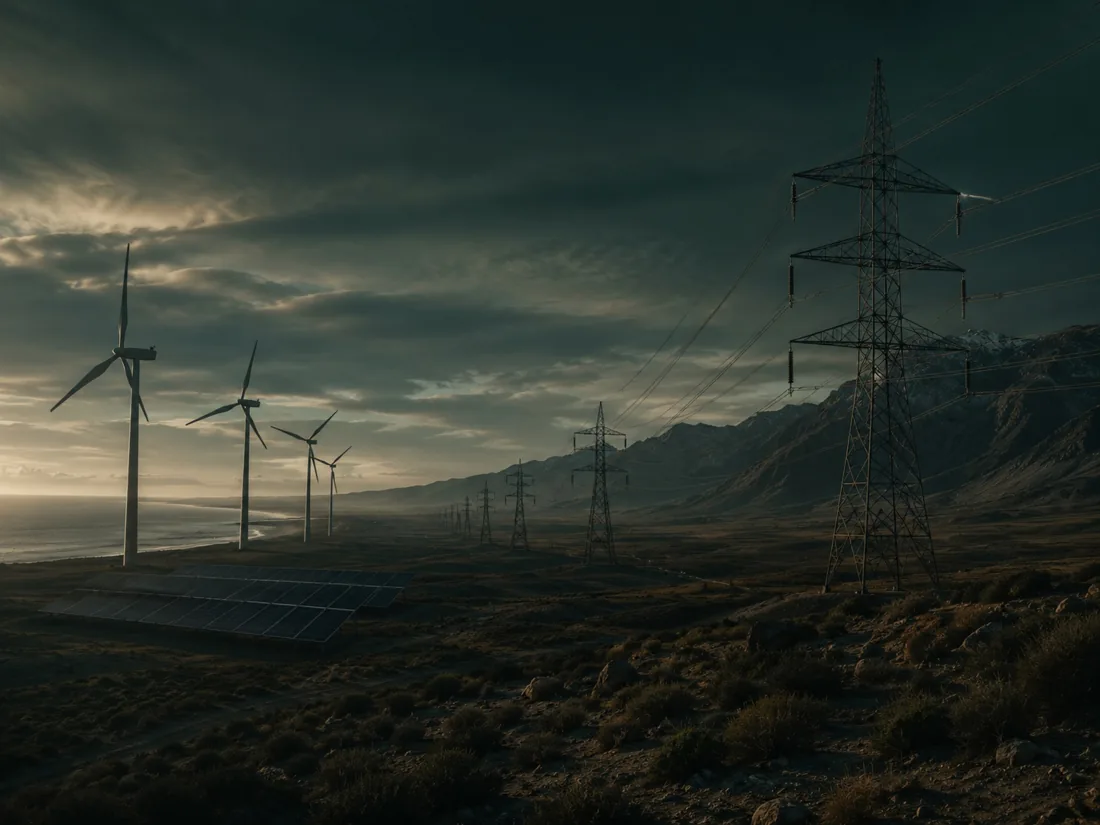
The Atacama records the highest solar irradiance on earth. The same sun feeds a grid already two-thirds renewable, and operators are co-developing solar and wind to lock long-term power.

63.9%Renewable installed capacity · 21.5 GW
2026Humboldt cable · first direct Chile-Asia route
Stage 04 / 13 · The original draw

The world already came for the sky.

The Atacama's clarity drew the planet's great observatories decades ago. The same dry air and clean power now draw the compute industry north. Chile has done this before.

Stage 05 / 13 · The enthusiasm

The map lit up.

The capital moved. AWS, Microsoft and Google have together committed more than USD 8 billion in Chile from 2025 forward, shifting from scattered facilities to campuses of 30 to 50 MW.

>$8bnHyperscaler capital committed · 2025 onward
53%Santiago capacity growth · H2 2025
Open a marker on the map
Stage 06 / 13 · Competing demand

The vineyards were thirsty first.

Wine, fruit and agriculture are among Chile's biggest export earners and its largest water users. A cooling permit is read against every hectare already drawing from the same rivers, and against the copper mines upstream.

Stage 07 / 13 · The pivot

Then the water table entered the room.

A data centre that cools with water competes with a city that is already rationing it. That is the moment the engineering stopped being the hard part. Entelligencia · Chile chapter
Three markers below the surface
Stage 08 / 13 · The source

The water starts as ice.

The southern glaciers and snowpack feed the rivers the whole country lives on. As they retreat, every downstream claim, farm, mine, city and campus alike, gets harder to grant.

Stage 09 / 13 · The water crisis

A decade of going without.

This is not a forecast. Central Chile has lost a measurable share of its rainfall for over fifteen years, the longest dry spell on record. Reservoirs and aquifers have not recovered, and a 2022 plan put Santiago on formal rationing tiers for the first time.

15yr+Continuous mega-drought, central Chile
2022First formal Santiago rationing plan
Stage 10 / 13 · What actually happened

Announced is not delivered.

The same frame Entelligencia applies everywhere: what cleared, what is still a commitment, what a court or community is disputing. Switch between the three to read the real pipeline.

Stage 11 / 13 · Social licence

A wall that talks back.

Valparaíso's murals are a reminder that public opinion here is loud, organised and visible. Community objection is a stage in the permit, not an afterthought, and roughly a third of environmental complaints touch indigenous land (an Entelligencia estimate).

Stage 12 / 13 · The binding constraint

Social licence decides the queue.

In February 2026 the SEA codified dry and closed-loop cooling as the baseline for approval. The market sorted the rest itself: water-hungry designs are no longer a viable path in central Chile. The constraint became a standard.

Open the marker on the mine
Stage 13 / 13 · The close

The geography is still the argument.

When the Humboldt cable enters service at Valparaiso, Santiago becomes the natural Western-hemisphere terminus for Asia-Pacific traffic, the only place a Latin American grid meets a trans-Pacific one. The opportunity did not go away. The terms changed.

Below, the same story rendered forensically: every project, pinned against the map that now decides which ones get built.

The file

Six findings behind the constraint.

Findings dossier · CHL
Compiled May 2026
Verified Announced Contested
Exhibitsthe build, on the ground
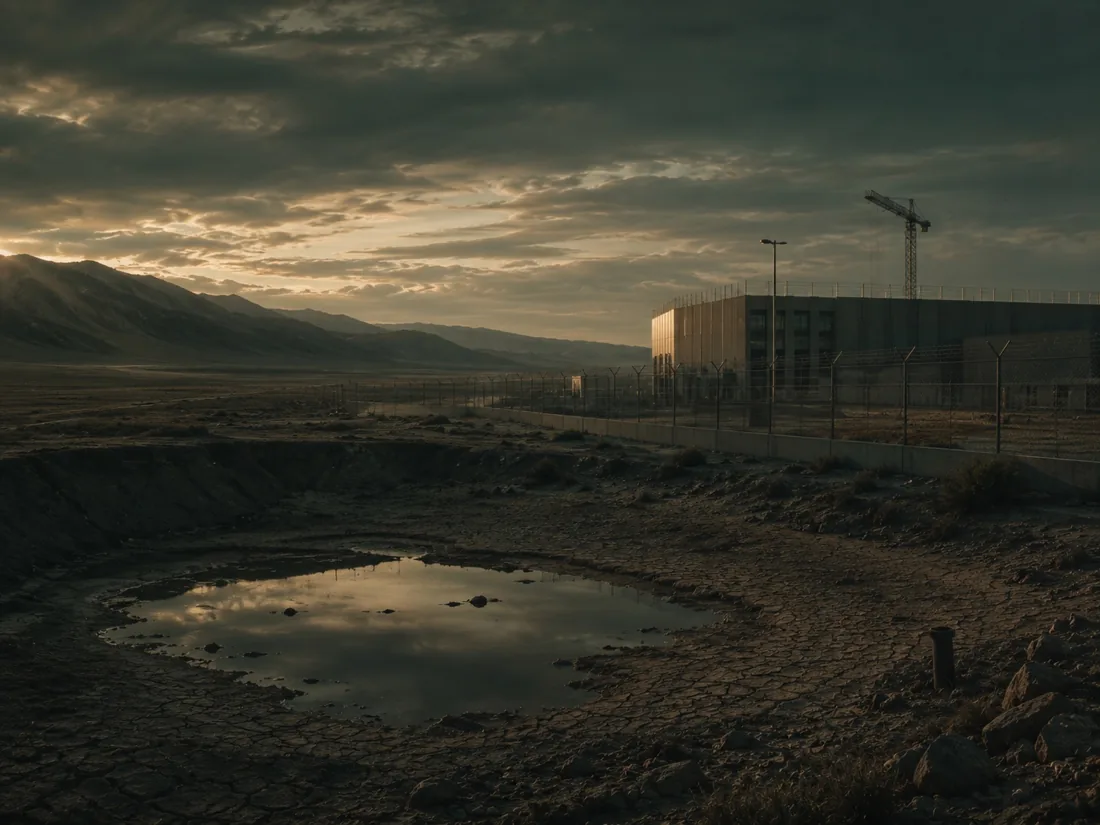
A data centre beside a water pool on arid Chilean land
EXHIBIT A · CERRILLOSThe water court and the halted campusGoogle’s USD 200 million project, paused in 2024 over aquifer use.
A coastal cable station on the Pacific shore at sunset
EXHIBIT B · VALPARAISOHumboldt cable to OceaniaThe first South Pacific subsea route, Valparaiso to Australia.
The Santiago skyline against the Andes at dusk
EXHIBIT C · SANTIAGOAWS infrastructure regionAbout USD 4 billion over fifteen years, three Santiago sites.
Wind turbines, solar panels and transmission lines in northern Chile
EXHIBIT D · ATACAMAThe greenest grid in the hemisphereRecord solar irradiance and a grid near 64% renewable.
An aerial view of a hyperscale data centre campus on the coast
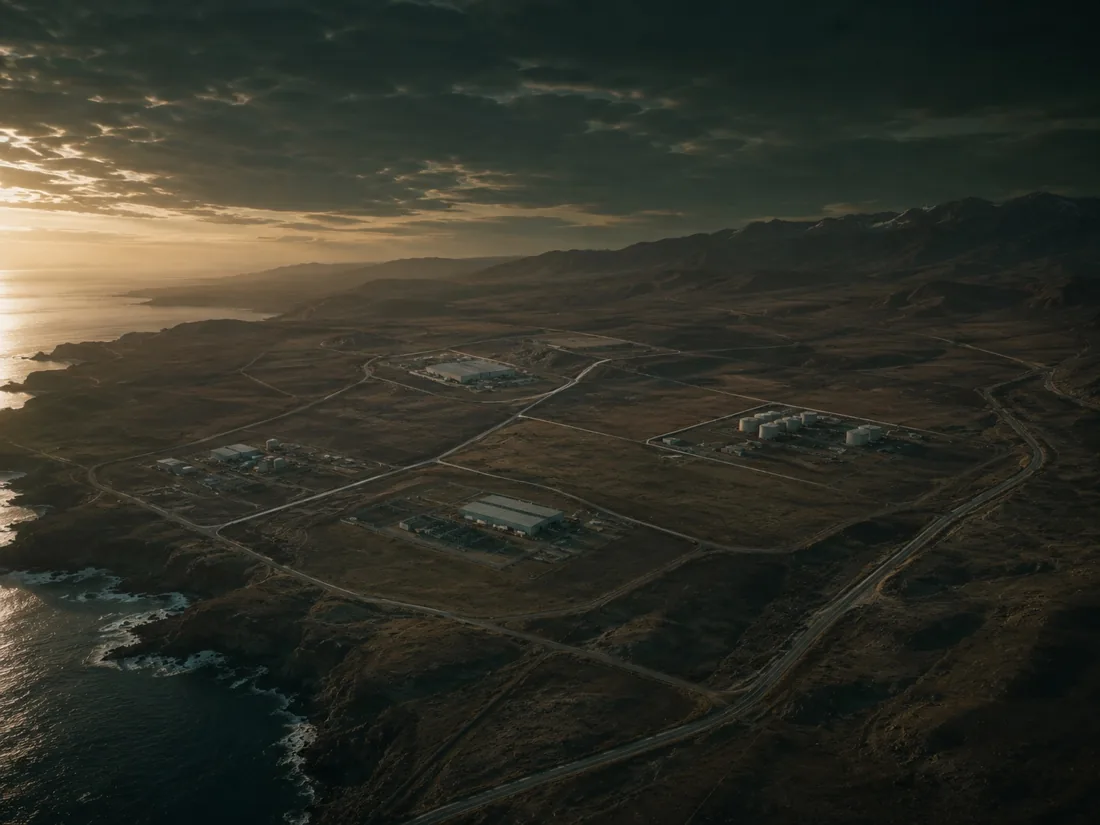
EXHIBIT E · THE BUILDHyperscale on the coastThirty to fifty megawatt campuses replacing scattered facilities.
A neoclassical courthouse and the Chilean flag beside construction
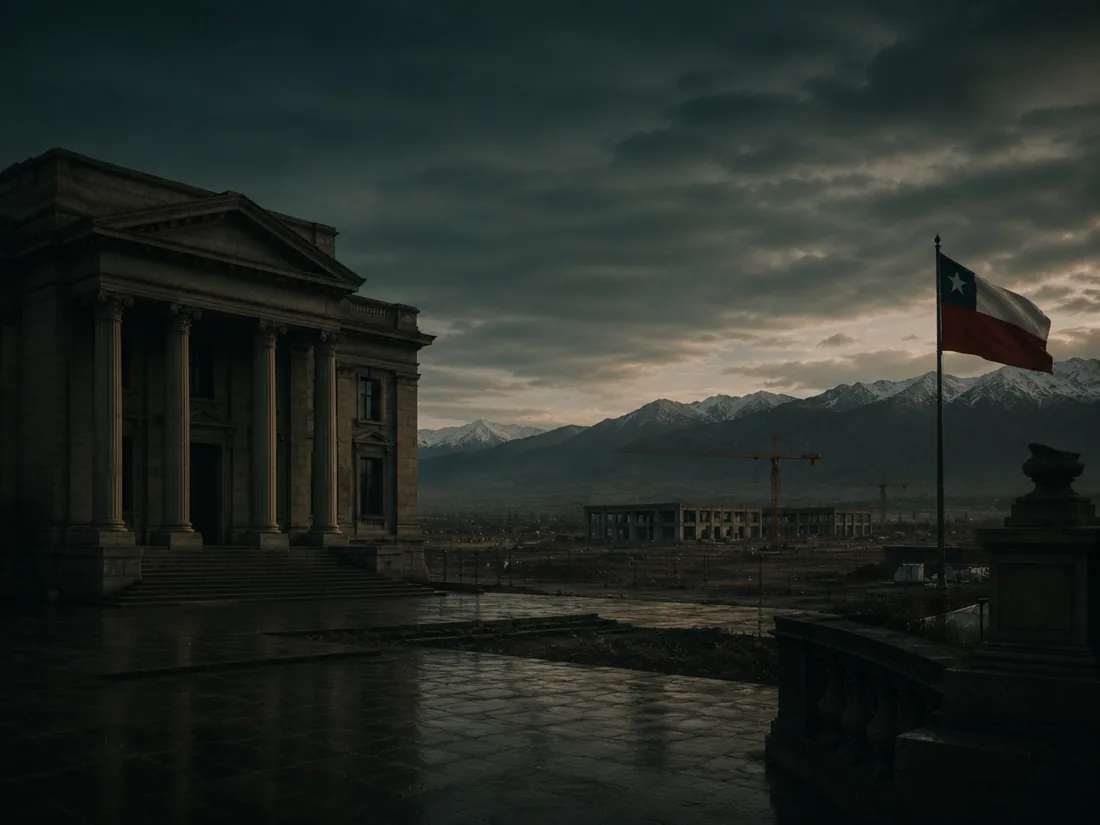
EXHIBIT F · THE COURTSPermission, decided in publicLicences and objections settled by courts and communities.
Planning documents and blueprints with an industrial coast beyond
EXHIBIT G · THE FILEThe dossier behind the buildEnvironmental filings, water rights and connection studies.
A family looking out over a Chilean town at dusk
EXHIBIT H · THE TOWNSSocial licence, household by householdThe towns that live beside the campuses.
A Chilean coastal city meeting the Pacific Ocean
EXHIBIT I · THE PACIFICThe Pacific edgeWhere the grid meets the ocean, and the cables come ashore.
The document

The paper trail, annotated.

Three primary sources behind Chile’s build: the national plan, the water court and the Humboldt cable, each graded claim by claim against the record. Select a tab to bring a document forward, an underlined claim to read the analysis, or filter by grade. These are annotated representations of the source documents.

Source ·   · marked by Entelligencia
Filter
Contributed · the energy seat A developer’s read, contributed to The Next Hotspot
The north ENT-NRT / CHILE · GRID AND CURTAILMENT

The best solar on earth. The wire arrives in 2029.

Fifteen hundred kilometres north of the Santiago aquifer, the Atacama runs the highest solar irradiance measured anywhere on earth. In 2025 the northern system spilled 6,084 GWh of what it generated, though the readings disagree and the file below says so. The transmission project designed to carry that power south is not scheduled to land before 2029. Those are the observations. Roberto Romero builds AI infrastructure across Latin America and was asked what follows from them. Six files. Each carries its own evidence and its own named source, and each is graded separately, so the reader can take the conclusion or leave it.

Evidence behind the six filesCoordinador Eléctrico Nacional · ACERA · the Kimal–Lo Aguirre transmission programme · Broker & Trader Energy Chile · Energy-Storage.news · BNamericasEvery figure below opens onto its own source line and its own grade. Two of the six rest on the contributor’s own model rather than the public record, and are graded Contributed instead of Verified.
Roberto Romero, NexxGroup
Roberto Romero
Co-Founder and CEO · NexxGroup
Energy-first design AI infrastructure, Latin America Contributed July 2026
Analyst margin

He builds in this market, and NexxGroup’s commercial model is the Energy AI Cluster set out in file 03. That is worth knowing while reading, and it is why the evidence beside him matters. We have published his framing in his own words and put independently sourced evidence beside it, none of which he was shown. Where the evidence is his own model, it is graded Contributed and stays there. The curtailment is real, the missing line is real, and the conclusion he draws from them is a position, not a measurement.

Contributed via the Entelligencia briefing survey, 28 July 2026, and published with the contributor’s approval. Ten questions were put; six resolve into figures the desk can test and are set out above. Positions are reported in the desk’s house style except where quotation marks appear, where the words are his own and are unedited. The contributor writes in a second language and his spellings are preserved inside quotation. Firm attribution shown as supplied and pending confirmation. He was not shown the evidence before he answered.
Contributed · the process seat

An industrial end user’s read, contributed to The Next Hotspot

The process defines the need. Technology expands how it is met.

This report is largely written by people who build, fund, power or staff data centres. Martín Ramírez Riquelme is the first contributor who buys the outcome. He runs critical infrastructure and data centre at Agrosuper, a food producer where a delayed response on a production line is not a service-level breach but a quality failure. Asked whether production reality or available technology decides where digital infrastructure lives, he scores it at 80 out of 100 toward what the production process actually needs, and then spends eleven files on the sequence that follows from it.

Martín Ramírez Riquelme
Head of Critical Infrastructure and Data Center · Agrosuper
80
of 100 toward production reality deciding, not available technology
01Contributed

Start at the wrong end and the process gets adapted to the solution.

“We want AI”, “we want to move to the cloud”, “we need edge”, and only then asking where it fits.

He calls that one of the most common mistakes. The right path runs the other way: understand the business value chain, examine what each production stage genuinely requires, and derive the operational requirements from that. Criticality, response time, continuity, availability, data sovereignty, cybersecurity and resilience. Only then does the architecture take shape, and only then the technology.

02Contributed

Access stopped being the advantage.

Access to technology is far more democratised than a decade ago. The competitive difference is no longer in reaching cloud, edge or AI platforms. It is in translating operational needs into a coherent architecture, while still recognising when a new capability creates a genuine improvement in the process.

03Contributed

Not every process needs milliseconds.

Reporting, planning and model training can tolerate seconds, minutes or hours. Others cannot: a delayed response, even where it is not an outage, can already degrade performance, quality or continuity. A machine-vision system doing quality control on a line may need local processing to avoid latency incompatible with the speed of the process.

Skip the question and decisions get made on cost, trends or preference. The result is workloads placed too far from the process that needs them, or edge infrastructure deployed where no operational requirement ever justified it.

04Contributed

Edge, core and cloud are one architecture, not three choices.

From the end user’s side the layers are not alternatives; they answer different operational needs. Strict requirements on response time, continuity or autonomy tend toward the edge. Value that comes from aggregation, training, planning or analysis sits better centrally or in cloud.

Mature architectures are hybrid in practice, not because hybrid is a trend but because production processes rarely share identical requirements. The common mistake is trying to solve everything with a single layer.

05Contributed

Both sides are right. They just start in different places.

One builds infrastructure to deliver a service; the other designs infrastructure to sustain a process.

He is explicit that this is not a knowledge gap. The supply side opens on availability, capacity, power, cooling, density and platforms. The industrial user opens on the production process and the operational consequence of that process failing. Both are valid, and they look at different parts of the same value chain.

What changes is the order. First understand the continuity the process requires, then size capacity. First define how data will be governed and protected, then select the AI model. First ensure the infrastructure can be maintained across its life, then pursue density.

06Contributed

Resilience is not a formula.

The reference point should not be the manufacturer’s catalogue. It should be the operational consequence of a failure.

Every process faces a different consequence when interrupted, and that consequence should set the redundancy. Oversizing ties up resources the process never required. Undersizing means discovering the true criticality of a process at the worst possible moment.

07Contributed

The hard part is outside the rack.

In a conventional facility the environment is a controlled condition. In an industrial operation it is a permanent design variable: humidity, corrosion, dust, vibration, washdown processes, thermal variation and operational constraints.

That reaches material selection, maintenance strategy and which technologies are appropriate at all. Equipment behaviour and useful life vary considerably by environment. Design cannot begin with the data sheet.

08Contributed

Six questions before AI is a technology discussion.

What continuity does the process require. What response time does it demand. What operational risk can it accept. What data exists and what is its quality. How will that data be governed and protected. How will the IT and OT environments coexist.

Answering those defines the architecture. Only then does it make sense to ask how AI creates value. In industry, sequence matters.

09Contributed

When it works, you cannot see it.

As long as infrastructure keeps pace with the process, it is almost invisible and production simply happens.

It becomes a constraint when capacity stops keeping pace with growth, when connectivity becomes a single point of failure, when maintenance requires the operation to stop, or when the environment accelerates degradation. In most cases the problem does not originate in the technology. It originates in an architectural decision not aligned with governance, made without sufficient understanding of the process and its effect on performance, quality, OEE or interruptions.

10Contributed

Two disciplines that need each other.

Colocation has developed extraordinary discipline around availability, standardisation, operations and continuous improvement, and he says that rigour is enormously valuable to industry. Industry brings the other half: availability is fundamental but it is a means, not the objective. Infrastructure decisions are ultimately judged by their effect on operations.

He declines to rank them. As architectures become hybrid and AI enters industrial operations, he argues the two perspectives need to converge. The best infrastructure is not the one with the most technology, but the one that strengthens the production process.

11Contributed

Chile: not a misalignment, an integration gap.

Chilean industry needs more than digital capacity. It needs an ecosystem able to support production processes that are increasingly dependent on data, automation and connectivity, and he says the investment arriving is aligned with a genuine need.

The gap he sees is in translation. Infrastructure is designed broadly and to standards; each production process has different requirements on criticality, response time, continuity and autonomy. And the growth does not rest on data centres alone: connectivity has to evolve at the same pace, and the power system has to carry demand from an economy that is electrifying as well as digitalising.

Contributed by Martín Ramírez Riquelme, Head of Critical Infrastructure and Data Center, Agrosuper, 10 August 2026, named with firm and title at the contributor’s request · passages inside quotation marks are reproduced from his written submission; his other positions are reported in the desk’s house style · framing and editorial selection are Entelligencia’s
Contributed · the policy seat

A public-sector read on Chile, contributed to The Next Hotspot

The state built the conditions. The market builds the halls.

A seat from the public side of the same build. Marcelo Rute ran Chile’s Telecommunications Development Fund, the instrument that took connectivity into places the market would not go, and he scores the AI question at 50 out of 100 between private boom and public infrastructure, which is the most balanced framing any contributor has given. Eight files on what the state should do, and where it should stop.

Marcelo Rute
Marcelo Rute
Former Head, Telecommunications Development Fund · Chile
50
of 100 between private boom and public good
01Contributed

Stability across administrations is the asset

His answer to why Chile’s connectivity numbers work, and it is not a technology answer. The long-term strategy for telecommunications infrastructure has held across multiple political administrations, and he names that continuity as the main driver. He is precise about the model behind it: Chile does not rely on a single state builder for public works. It runs a private concessions model alongside specialised state-owned companies for rail, ports and urban transit, and in telecommunications the result was achieved through policy and subsidy rather than state construction.

02Announced

Codified, not promised

Two laws he points to as the substance behind the ambition. The Cybersecurity Framework Law 21,663, which created the National Cybersecurity Agency, and the modernised Personal Data Protection Law 21,719, aligning Chile with GDPR-standard requirements.

03Contributed

Sovereignty as neutrality, not isolation

“Chile can ensure that critical data infrastructure is resilient, trusted by global players, and built to withstand international geopolitical shifts.”

From the policy seat, digital sovereignty for Chile does not mean building walls. It means strategic autonomy: political stability, enforcement of the rule of law, and cybersecurity frameworks robust enough that an investor treats the territory as secure and neutral.

04Contributed

Where the state should stop

A precise division of labour, and the most useful thing in the submission for anyone siting a facility. The state should lead on international fibre landing points, land access, and regional grid capacity and security. Once those baseline conditions exist, the market is better placed to build, fund and operate the facilities themselves.

05Contested

The south has the climate and not the grid

His read on decentralisation, and it complicates this chapter. Investment concentrates around Santiago because power and international connectivity are there. Southern Chile offers a favourable cooling climate, and regional grid capacity remains insufficient for large-scale projects. He is candid that regional development reads as a long-term objective in Santiago rather than an immediate national priority.

06Contributed

Coverage is close to solved. Adoption is not.

On the Plan Brecha Digital Cero. Coverage and quality gaps have narrowed sharply, helped by low-Earth-orbit satellite in remote areas and SUBTEL’s fibre programmes. What remains is harder: households with physical coverage who see no value in using it. His conclusion is that infrastructure spending must increasingly fund digital literacy and adoption, or the connectivity does not convert into economic effect.

07Contributed

The missing link runs east, not north

On subsea and international connectivity. Chile has backed its hub ambition with cables toward North America and across the Pacific, and has studied a link to Antarctica. What is missing is terrestrial: robust redundant land routes across the Andes to Brazil and Peru, without which Pacific subsea capacity does not reach South America’s largest markets.

08Contributed

What makes a public-private project actually work

Asked what succeeds and what stalls, he answers with a mechanism rather than a principle. Multidisciplinary task forces, where the public side understands market incentives and the private side can navigate public constraints. He names SUBTEL’s tender-with-subsidy model, and the Austral Fibre Optic programme in particular, as the working example.


Analyst margin

He ran the fund he is describing, which is worth knowing while reading an account of how well Chilean connectivity policy worked. It is also the reason the answers are specific about mechanism rather than outcome: the task-force point and the tender-with-subsidy model are how it was actually done, not how it is usually written up.

His southern-grid finding is the one that complicates this chapter rather than confirming it. This chapter argues Chile’s binding constraint is social licence over water in the centre, and Roberto Romero argues it is transmission in the north. Rute adds a third: the south has the climate for cooling and not the grid to use it. Three readings, three geographies, one country.

Firm attribution is recorded as supplied. The Fund sits within SUBTEL, and the exact form of words he wants against his name is being confirmed with him.

Contributed via the Entelligencia briefing survey, 31 July 2026, revised by the contributor on review, 1 August 2026, and attributed by name with firm and title at his request. Nine questions were put; all nine were answered. Positions are reported in the desk’s house style except where quotation marks appear. Law 21,663 and Law 21,719 are matters of public record and graded Announced against their enactment; his readings of policy effect are graded Contributed.

The people

Who actually decides Chile's data-centre buildout.

Ángel Izurieta
VP Latin America · Huawei Cloud
Profile · 01 of 04
Ángel Izurieta
VP Latin America, Huawei Cloud · ex-Country Manager, Google Cloud Chile
Influence
Shapes cloud and data-centre strategy across Chile, having led Google Cloud's local business before Huawei. Earlier roles at Accenture and EY.
Working on
Drives enterprise transformation that pulls workload demand into Chilean hyperscale and colocation capacity.
Frames the buildout around a single question for the region: what world do we choose to build?
Keynote framing · as reported
Rafael Mattje de Carvalho
Head of Technology · AWS South of Latin America
Profile · 02 of 04
Rafael Mattje de Carvalho
Head of Technology · AWS SOLA (Chile, Argentina, Paraguay, Uruguay)
Influence
Leads the teams working with AWS's largest Chilean customers, steering which workloads land in the USD 4bn Chile region.
Working on
Scaling and resilience of mission-critical workloads, and building teams for large transformations.
Positions cloud infrastructure as the foundation for enterprise innovation, not just raw capacity.
Public profile · as reported
Mario Vázquez
Regional Data Center Services Manager · Google, LatAm
Profile · 03 of 04
Mario Vázquez
Regional Data Center Services Manager · Google, Latin America
Influence
Based near Santiago, he leads the team building Google's Latin American data centres, including Quilicura, and fronts the jobs and community programmes.
Working on
Safe delivery of the regional build-out, plus community work like the Urban Forest initiative on former indigenous land.
Describes a strong sense of purpose when a data centre goes online, stressing jobs and urban restoration.
Google data-centre profile
Guillermo Cipolla
Founder · Hyper DC Consulting
Profile · 04 of 04
Guillermo Cipolla
Founder · Hyper DC Consulting · independent strategist
Influence
An independent voice on construction, efficiency and sustainability, advising operators and investors across Latin America.
Working on
Efficiency and sustainability work that dovetails with Chile's National Data Center Plan and the scrutiny on water and power use.
Links business success directly to energy-efficient, responsible infrastructure as the basis of Chile's competitiveness.
Public material · as reported
+40 mapped in Enable Chile
The full people-map · Edition 02
The wider map
The full people-map
Chile's data-centre decision-makers
Scope
Operators, hyperscaler leads, investors, regulators and community voices across the Chilean market, on the record.
In Enable Chile
Each profile carries on-record positioning, working priorities, and the project they actually shipped.
The people-map is the part of Enable Chile readers will return to twelve months after publication.
Editorial brief · 2026
The map

Every project, pinned against the map that now decides it.

The scroll made the argument. The map makes it forensic. Each glowing node is a real project, colour-coded by what it actually is: verified, announced, or disputed. Open one for the detail, and toggle the overlays to see the pipeline sit against water-stress, community land and solar. Geography is stylised; production uses verified coordinates and published boundary data.

Chile project map · live
ENT-CL-MAP-2026.05 · 10 of 40+ plotted
Region
Overlays
Water-stress
Indigenous land
Solar irradiance
Verified · live or in build
Announced
Contested
HIGHEST IRRADIANCE ON EARTH MEGA-DROUGHT BELT ACUTE · SANTIAGO MAPUCHE TERRITORY Atacama Valparaíso Santiago South Atacama Humboldt TECfusions Microsoft Ascenty AWS Equinix Amazon Google Southern edge
Verified
Project
Location

Body.

Click any node for the project brief
Projects in view
10
Financed to completion
40-55%
Dominant constraint
Social licence (water)
The supply chain

From capital to compute · who’s active in Chile

Chile supply chain · live
Hover any node · Click for detail
Investors
Patria
Actis
DigitalBridge
BTG Pactual
Banco de Chile
Suppliers
Vertiv
NVIDIA
Schneider Electric
ABB
Cummins
Trane
Caterpillar
Operators
Ascenty
Equinix
Scala
ODATA
EdgeConneX
Cirion
GTD
Sonda
Hyperscalers
AWS
Microsoft
Google
Oracle
Meta
Corporates & state
Codelco
Falabella
BCI
Mercado Libre
AI workloads
OpenAI
Anthropic
Azure AI
Vertex AI
Flow

Capital flows left to right, from investors through suppliers and operators to the hyperscalers, corporates and AI workloads that consume the stack. Hover any node to trace its position. Click for the company brief.

06 tiers · 34 entities
The wider programme

More in Enable Chile.

This chapter is the briefing. Enable Chile is the full intelligence product: the Pacific gateway edition of a four-part programme.
Edition 01 Brazil The scale chapter
Edition 02 Chile The Pacific gateway
Edition 03 Colombia The next entrant
Edition 04 The Americas The synthesis
Edition 02 Enable Chile flagship cover
The flagship · publishing Q2 2028

The clearest read of who is actually delivering Chile.

Operator by operator: what cleared, what is still a commitment, and what a court or community is disputing. Site visits, named interviews, and the people-map of the market, held to one standard, that nothing is published until it is verified.

150pp
Flagship report
2032
Capacity horizon
3
Cities · Ldn · Stgo · Hnl
Register interest
Four briefings · 2026 to 2028
The cadence to the flagship
Q3 2026
Announce
Q4 2026
Foundation
Q3 2027
Synthesis
Q1 2028
Honolulu cut

Each briefing is a quarter of a flagship: narrower scope, sharper edge, faster cadence. The delta ledger shows exactly what moved between Verified, Announced and Contested since the last edition.

By invitation
Two convenings
Honolulu · January 2028
The Pacific Room
At PTC, the senior gathering point of the subsea and data-centre industry.
Santiago · April 2028
The Deployment
The flagship launch, in the market it maps. The room is what they paid to be in.