The Demand Behind the Demand

The supply story is land, power and capex. This is the other half – which business models become fundable, compliant, scalable workloads, and which die in the lab.

Bottom line

Most of this report reads the supply: land, power, capex, pipelines. The harder question is which AI and digital-asset business models will still be renting megawatts once the law, the fraud risk and the capital markets have filtered the hype. Two CMS lawyers, an enterprise adviser and an operator read that demand, with more contributors joining.

Read7 min
The lensDemand-side
The two gatesFunding · rules
SourcingContributed · graded
The demand funnel · tap a stage many models in · few become load-bearing
IN ยท THE FIELD AI & digital-asset models the field GATE 01 ยท FINANCING What gets funded Kerrigan GATE 02 ยท REGULATION What regulators allow Stanford OUT ยท LOAD-BEARING Load-bearing demand survivors financing gate regulation gate what clears both
× the rest dies in the lab

Owned by
What it filters
For data-centre demand
The contributors

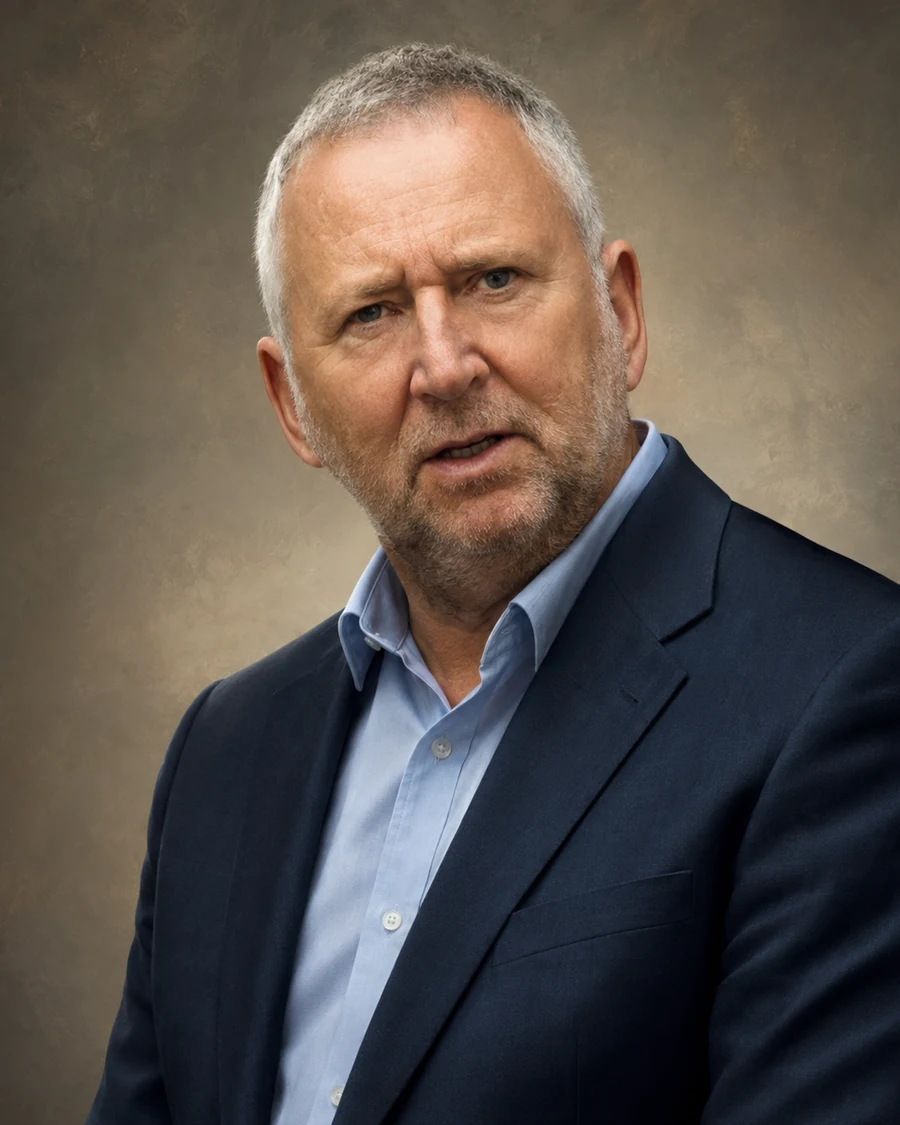
The lens is theirs; the read is the Entelligencia desk’s, graded and sourced like the rest of the report. Two CMS lawyers who sit upstream of the build, where AI and digital-asset business models are financed and regulated long before they become megawatts. An adviser who works downstream of it, inside the enterprises expected to absorb what gets built. And an operator who argues the capacity should go somewhere else entirely.

Charles KerriganCK
Charles Kerrigan
Partner · AI, crypto & digital assets · CMS

Kerrigan structures the financings that turn AI and digital-asset ideas into fundable businesses. His public record spans over $5bn of fintech platform financings, more than 65 NFT projects and 250-plus crypto-asset clients, plus tokenisation across debt, equity and alternatives. He edits the reference works practitioners and regulators reach for, and advises the Bank of England’s Financial Markets Law Committee and UK parliamentary groups on AI and blockchain.

$5bn+ · fintech financings
250+ · crypto-asset clients
Editor · AI & crypto law
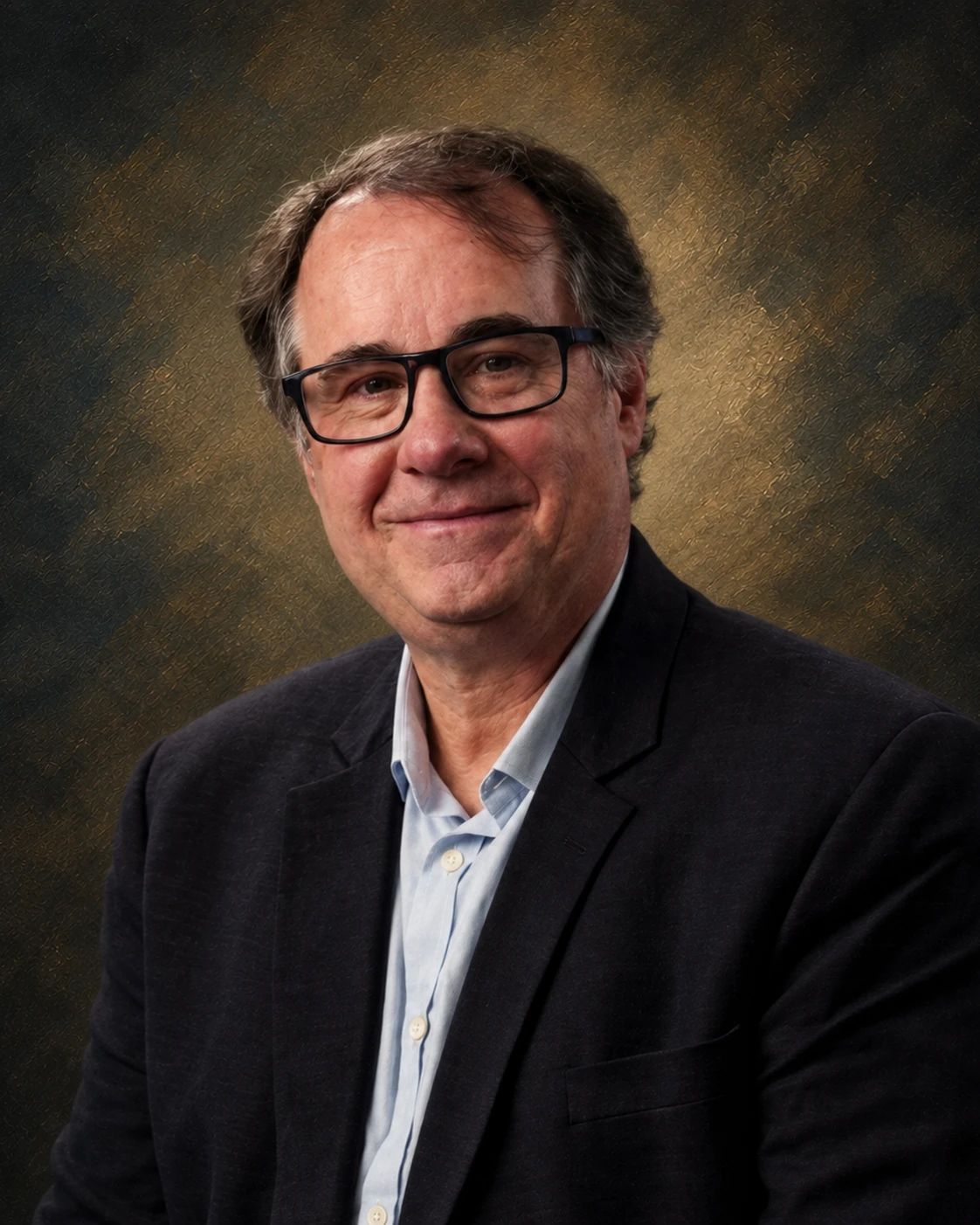
Erica StanfordES
Erica Stanford
Crypto risk & digital assets · CMS

Stanford works within CMS’s digital-assets and AI team, with a specialism in crypto-industry failures, fraud and risk. Her lens reads which business models are durable demand and which are likely to be regulated away or simply collapse – the filter most capacity forecasts never apply. Where Kerrigan reads what can be financed, she reads what will still be standing once the fraud and the rule-making have done their work.

Risk · fraud & failure lens
Durability · what survives the rules
Digital assets · CMS team
Wallis MillsWM
Wallis Mills
Founder & Principal Advisor · Modern Enterprise

Mills advises enterprises on the part of AI adoption that happens after the contract is signed. Her work sits where strategy meets operating model: how authority, workflow and risk ownership have to move before compute can be used at scale. She argues the binding constraint on the build is organisational rather than technical, and reads the split between training and inference as two infrastructure markets rather than one.

73 · of 100 on absorption
7 · files
Peter HannafordPH
Peter Hannaford
CEO · EdgeNebula

Four decades in the industry, now arguing the next tranche of capacity does not need new ground. Hannaford’s case is redundant urban buildings and stranded power, with resilience held in the network rather than in any single building.

0 · of 100 on leaving the planet
8 · files
Contributed · the legal seat
Charles Kerrigan
Charles Kerrigan
Partner · CMS
corporate finance and emerging technology

“Nobody knows anything.” Including the lawyers.

Kerrigan does the diligence on the deals this layer is about. Asked how many AI and digital-asset models become fundable demand, he put it at 35 out of 100, and then declined to pretend the number was knowable.

He reaches for William Goldman, who in 1983 tried to explain which films would earn back their cost and concluded that nobody knows anything. Kerrigan applies it directly to AI, with one qualification: it would be strange, he says, if we started working with the most transformational technology since electricity and all it ended up doing was helping with emails.

Digital assets he finds easier to call. Regulation in most jurisdictions now pulls crypto inside the perimeter and treats it as investment, with the disclosure and customer-safety obligations that follow. If you wanted institutional adoption, you got it. If you wanted an alternative financial system, you did not.

“Could the business be copied by two kids in a garage with Fable?”

One of three questions he now asks of anything described as AI-powered. The first is whether it really is. The second is whether the AI use is fit for business, which is a mix of legal, engineering and commercial work. The third is that one, and the follow-up that matters more: would the copy lack the proprietary data that makes the original valuable, and would it be enterprise-ready on security and maintenance. There is still a wide gap between vibe-coded work and software you could offer a sophisticated partner.

Contributed by Charles Kerrigan, Partner, CMS, 7 August 2026 Contributed
What makes an AI or digital-asset model fundable, weighted out of 100

He was given six factors and one hundred points. This is where a corporate finance lawyer put them, and it is not where the brief expected.

Track record50
Counterparty quality14
Legal structure9
Contracted revenue9
Real asset backing9
Regulatory clarity9

In his own words: “Have I set the sliders in a place you didn’t expect from a lawyer? Teams are the most important thing. Everything else can be fixed.” He rated regulatory clarity at nine deliberately, on the reasoning that once there is a rule saying how you can do something, everyone can do it. A really new business idea has no rules, because we only make rules for things we have already seen. Asked what most often kills fundability early, he was blunt: a founder team that falls out or lacks true alignment.

Contributed to The Next Hotspot by Charles Kerrigan, Partner, CMS, 7 August 2026, named with firm and title at his request · evidence gathered independently by the Entelligencia desk and not shown to the contributor before publication · where his framing exceeds what the record establishes, that is stated rather than smoothed over
Contributed · the absorption seat
Wallis Mills
Wallis Mills
Founder and Principal Advisor · Modern Enterprise

The compute is built. The organisation is not.

Wallis Mills works inside the enterprises expected to absorb what gets built, which is where this chapter’s question is finally settled. Her answer is that the demand may not arrive in the form the build assumes, and she is specific about why. Not that nobody wants it. That enterprises cannot reorganise fast enough to use it. Seven files on institutional drag, the training and inference split she calls the Great Decoupling, and the data debt underneath all of it.

73/100
toward enterprises being unable to absorb it
It gets usedCannot absorb it
The decoupling, in gigawattsTraining and inference are near parity today. By 2030 the projection has inference at half again as much power as training.
0255075100202520262027202820292030 Inference 93.3 Training 62.2
McKinsey data centre demand model · gigawatts · 2026 to 2029 interpolated between published endpoints Estimated · projection

Contributed by Wallis Mills, Founder and Principal Advisor, Modern Enterprise, 10 August 2026, named with firm and title at the contributor’s request · passages inside quotation marks are reproduced from her written submission; her other positions are reported in the desk’s house style · supporting evidence, grading and desk reads are Entelligencia’s and were gathered independently · the Great Decoupling is her term for the training and inference split and is used here as hers

Contributed · the regulation gate
Erica Stanford
Erica Stanford
Crypto risk and digital assets · CMS

Not all of it is fraud. Not all of it lasts.

Charles Kerrigan reads which business models can be financed. Wallis Mills reads whether the buyer can absorb what it bought. Stanford applies the third screen: how much candidate demand survives the regulation and the failure rate. She is careful about the fraud number, putting criminal use at around one per cent, and hard about what that leaves. Six files, and a closing question no other contributor has asked in quite this way.

35/100
toward most of the demand standing up
Most washes outMost stands up
What decides whether a model clears the gate

Her weighting, out of 100. Governance outranks the licence, which is the item a forecast is most likely to treat as sufficient.

Governance23
Regulatory licence21
Transparency21
Fraud and AML controls14
Consumer protection11
Jurisdiction10

Contributed by Erica Stanford, CMS, 21 July 2026, named with firm and title at the contributor’s request · passages inside quotation marks are reproduced from her written submission; her other positions are reported in the desk’s house style · framing, weighting labels and desk reads are Entelligencia’s

Contributed · the distributed seat
Peter Hannaford
Peter Hannaford
CEO · EdgeNebula

The answer is already built. It is just not a campus.

Four decades in the industry, and a view of where the next tranche of capacity physically goes that sits at one end of the scale. Peter Hannaford scores the framing at 0 out of 100 toward compute leaving the planet. His case is that redundant urban buildings and stranded power can carry it instead, and that resilience belongs in the network rather than the building. Eight files.

0/100
toward compute leaving the planet
Stays terrestrialLeaves the planet

Contributed by Peter Hannaford, CEO, EdgeNebula, 12 August 2026, named with firm and title at the contributor’s request · passages inside quotation marks are reproduced from his written submission; his other positions are reported in the desk’s house style · supporting evidence is Entelligencia’s, gathered independently and set beside his file rather than substituted for it

01 The lens · demand, not supply

The demand behind the demand

AI is now the primary engine of new data-centre capacity; multiple studies put it past half of total IT load by the early 2030s. The money has caught up with the forecast: combined 2026 capital spending by the top five hyperscalers is set to exceed $600bn, most of it directed at AI systems Announced, with 2025 to 2027 tracking toward $1.15tn and financed increasingly through infrastructure vehicles and asset-backed structures Estimated. But a megawatt forecast is a supply abstraction. Behind every persistent workload sits a business model that had to be financed and had to pass a regulator.

AI training and inference want high-density power, new cooling and specialised interconnects; crypto and digital-asset platforms – exchanges, custody, tokenisation, on-chain analytics – add their own steady draw. Both increasingly run in colocation and cloud rather than enterprise server rooms, so a regulatory or business-model shift translates almost directly into a leasing decision and a power-capacity plan. The supply side of this report tracks where the megawatts get built. The demand side asks a harder question: which workloads are real enough to fill them, and for how long. Kerrigan and Stanford sit where that gets decided – not in the data hall, but in the financing and the regulation that let a model or a token become a business in the first place.

02 The framing · two pipelines

Supply is one pipeline. Demand is another.

It helps to draw the contrast plainly. The two lawyers rarely sit on the same panel, which is exactly why the demand-side view is useful: it reads the build from the other end.

The classic lens
The data-centre projects lawyer
Works on · land, leases, power, grid, permits
Reads · what can be built, and where
Risk · consent, construction, delivery
Sees a pipeline of supply
This lens
The AI & digital-asset lawyer
Works on · financings, tokenisation, AI & crypto compliance
Reads · which models become fundable, compliant workloads
Risk · regulation, fraud, capital-market durability
Sees a pipeline of demand
03 The financing gate · Kerrigan

What gets funded survives

Real-world asset tokenisation has moved from pilots to live institutional deals – tokenised treasuries, funds and private credit – and developers are now reaching for the same machinery, using real-world-asset structures and stablecoin-denominated financing to tap broader capital pools, which is drawing closer regulatory attention Contested. Buyers are also locking supply years ahead, through forward capacity reservations and direct wafer prepayments with memory makers, the mechanism now visible in the memory squeeze Verified. and the structuring work that makes them legally robust is, in practice, what decides which projects get funded and built.

$5bn+
fintech platform financings in Kerrigan’s public record
250+
crypto-asset clients: exchanges, DeFi, gaming, Web3
65+
NFT projects, plus tokenisation across debt, equity, alternatives

He also edits the reference works practitioners and regulators reach for – Crypto and Digital Assets: Law and Regulation (2023) and a second edition of Artificial Intelligence: Law and Regulation in early 2026. A fundable structure is the difference between a deck and a workload: the tokenised infra or AI project that is legally robust moves from idea to real compute sitting in a data centre; the one that is not, does not.

04 The regulation gate · Stanford

What regulators allow

Financing decides what can be built; regulation decides what is allowed to run, and how fast it can grow. The EU AI Act, IOSCO’s crypto recommendations and Europe’s MiCAR regime are tightening at once, and each rule is a gate: it lets some business models through and closes others.

This is where Stanford’s lens earns its place. Her work on crypto failures, fraud and risk reads which models are durable demand and which are likely to be regulated away or simply collapse – a filter most capacity forecasts never apply. Kerrigan, for his part, advises bodies such as the Bank of England’s Financial Markets Law Committee and UK parliamentary groups on AI and blockchain, which is to say he is close to where the gates are set. Put the two together and you get a rare read on which megawatts are speculative and which are load-bearing.

Contributed · Erica Stanford, CMS

Stanford’s read is more sceptical than the headline forecasts, but not for the reason most assume. Her lens is which business models are durable demand and which are likely to be regulated away or simply collapse: a filter most capacity forecasts never apply.

Asked how much candidate demand survives a regulation-and-fraud screen
35/ 100 standing up. Roughly two thirds of what is currently counted as demand does not survive contact with the new rules.
0 · none of it survives100 · all of it holds
~1%
of all crypto activity is criminal use, on crypto-analytics estimates she cites. Fraud is not the great washout. Most usage, trading, investment and increasingly stablecoin-based cross-border payments, is legitimate. What thins the field is failure, lost confidence, and business models that cannot survive the new rules.
Gate 01

MiCAR

Tests: reserves and authorisation

Crypto firms must hold audited reserves and obtain full authorisation to operate in the market.

Designs out algorithmic coins and offshore issuers.
Gate 02

IOSCO

Tests: structural integrity

Ends the model where a single firm is exchange, broker, market-maker and counterparty at once.

Regulates the FTX structure out of existence.
Gate 03

EU AI Act

Tests: verifiability

Asks whether a model’s behaviour can be evidenced when it is used in high-stakes settings.

Closes out models that cannot be audited.

Three regimes, converging on a single test. Together they close the era of unauditable business models, in crypto and AI alike.

Where she draws the line straight to the build
The asset · how data centres are financed15 to 30 years
The tenant · much of today’s candidate demandFast-moving startups and fast-growing tech firms

Build megawatts against the shorter clock without screening for compliance and true unit economics, she warns, and you risk raising multi-million-dollar shells for tenants that will not last the life of the asset.

The one screen
she would add
Will the customer still be operating, licensed and able to pay in ten years’ time?
Announced Chainalysis criminal-use estimate (~1% of crypto activity), cited by the contributor. Survival score and weighting contributed by Erica Stanford, CMS.
05 The shapes · four live archetypes

Four shapes the demand is taking

None of this is abstract. Four live archetypes already sit on top of data centres, each a different way the demand-side story shows up in a financing document.

Archetype 01
Tokenised AI infrastructure fund
A manager raises capital through a mix of LP commitments and tokenised fund interests, then finances GPU-dense colocation sites and edge AI nodes, locking in long-term power and capacity.
What it means for the buildExperimenting at the margins of how AI-heavy capacity is financed and owned.
Archetype 02
AI model platform with RWA links
Risk and credit analytics for tokenised real-world assets, delivered as SaaS from regional data centres with persistent high-density inference and strict data and model-governance rules.
What it means for the buildSticky, regulated workloads, not experimental GPU clusters.
Archetype 03
Tokenised data-centre revenue share
A developer issues revenue-sharing tokens on a facility’s net revenues, with smart-contract distribution sitting on top of a conventional SPV and OpCo-PropCo structure.
What it means for the buildTokenised revenue rights, tested in niches, over traditional project finance.
Archetype 04
Regulated digital-asset platform in colo
An exchange or custodian runs its matching engine and risk stack across multiple colocation hubs, trading tokenised RWAs and stablecoins under capital-markets and payments rules.
What it means for the buildA repeat, high-reliability, latency-sensitive tenant profile.
06 The conclusion · for the build

What it means for the build

The point is not that lawyers build data centres. It is that the people who structure the financings and navigate the policy help decide which AI and digital-asset business models scale – and therefore how much capacity, and where, the build actually needs.

They sit upstream of data centres, at the point where AI and digital-asset business models either become fundable, compliant, scalable workloads – or die in the lab.

And the capital itself is now fragmenting along geopolitical lines, as United States and China security reviews tighten scrutiny of cross-border ownership of physical compute Estimated. The demand behind the demand is a financing question as much as a compute one. Who can underwrite a gigawatt before it is built, and across which borders, increasingly decides where it lands.

Read that way, this is a demand-side instrument: an early indicator that sits alongside the report’s supply-side spine of land, power, capex and pipelines. Stanford’s direct account of the regulation-and-fraud screen is now part of this read, above. The fuller CMS read – an interview and essay with Kerrigan and Stanford on tokenised infrastructure, AI and digital-asset policy, and the durability of demand – is forthcoming.

The Next Hotspot · dropping
Entelligencia

The supply side is measured. This is the other half.

The Demand Behind the Demand is a Strata layer inside The Next Hotspot, an interactive read on where the world actually builds AI infrastructure. The full edition is live, and the remaining drops are dated below.

Live now · SociogenciaOriginal analysis is dropping already. Read the studies.Read the studies →

Get each drop as it lands
One email per release: original analysis, the market chapters, the full report. No noise.

EntelligenciaThe Next Hotspot

Sources: contributor profiles and public record for Charles Kerrigan and Erica Stanford (CMS; Law Society of Scotland; the Journal of International Banking and Financial Law; reference works, 2023 and 2026); demand projections drawn from McKinsey, ABI Research and Data Center Knowledge; tokenisation and regulation context from the World Economic Forum, IOSCO, the EU AI Act and MiCAR. Archetypes are illustrative demand-side structures, not specific transactions. Direct quotes and a fuller interview with the contributors are forthcoming; the framing here is the Entelligencia desk’s.