Original analysis · the layer between built and working

Mind the gap.
Complete is not proven.

The report has spent ten markets on land, power and capital. This is the layer underneath all of them: the discipline that decides whether a finished building will actually carry a live load. Louis Charlton, Group CEO of GCV Group, on where risk is created, the seams where it accumulates, and why the commissioning crunch will not be solved by hiring.

The line, end to end 6 stages
Where risk accumulates The seams
Grid wait, against an 18-month need 5–7 yrs
Density air cannot carry 200kW+
Louis CharltonGroup CEO · GCV Group

The gap this report keeps walking past.

A building can be finished and still not work.

Every chapter in this report ends at the same place: a site with land, a grid connection and a financing package. What none of them examine is the discipline that stands between a completed building and a working one. That discipline is lifecycle assurance, and the industry has historically treated it as a service bolted on at the end rather than a thread running through the whole build. Louis Charlton, who founded Global Commissioning and now leads GCV Group, puts the distinction in six words: complete and proven are not the same thing. Complete is a construction status. Proven is an assurance status, and only one of them tells you the facility will do what it was designed to do when it is carrying real load.

The structural problem is a mismatch of position. Almost all of the risk in one of these facilities is created on the left of the timeline, at concept and design, in decisions about how power is distributed, whether energisation can be staged, whether the building can be tested at partial load and re-verified in five years without being pulled apart. By the time a spade is in the ground, that ceiling is largely fixed. But in the conventional model the commissioning authority is appointed after the design is finished. The risk sits at one end of the line and the people whose job is to catch it stand at the other. Charlton calls the usual arrangement what it is: a closeout with an earlier start date.

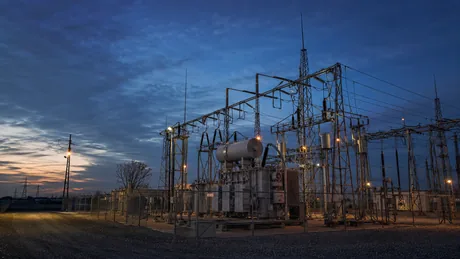
That gap is widening because the buildings changed faster than the method for proving them. Grid connection timelines running to five or seven years against an eighteen-month capacity requirement have pushed operators to bring power infrastructure inside the fence, which turns high voltage from somebody else’s asset into a strategic one. Rack densities above 200kW have made liquid cooling unavoidable, and introduced failure modes that cannot be fully proven until real compute is running. Phased delivery means live systems and open construction now share a site. Each of those pushes the assurance boundary outward, upstream into the energy chain and downstream into live operation, while shrinking the room to get it wrong. This chapter follows that line from the first design decision to the fifteenth year of operation, and marks the points where a planner, an investor or an operator should ask for proof.

Risk is created on the left. Control arrives on the right.

Asked to set out the lifecycle in a single diagram, Charlton described one horizontal line and a structural mismatch along it. Almost all of the risk is created at the far left, in design decisions taken before anyone is on site. In the conventional model the people whose job is to catch it are appointed at the far right. Between them sit the seams, and it is at the joins rather than inside the phases that risk actually accumulates. Switch the model below, then select any stage or hand-off.

Risk created herealmost all of it, before a spade is in the groundmost dangerous seam01Concept& design02Procurement &factory test03Construction04Energisation05Handover06Live operationsControl arrives herea closeout with an earlier start dateOne continuous thread of accountabilityheld across every hand-off, and not let go at handover
Scroll the line sideways →
What Louis Charlton said
“Then there’s energisation, and this is the part I think the market underestimates. On a phased build, parts of the facility are live while other parts are still under construction. The moment that’s true, we’re not just proving equipment works. We’re controlling risk in a live environment: energisation management, switching, safe systems of work, and clear accountability between the construction, commissioning and operations teams who are all sharing the same site at the same time. That’s a safety discipline, and it has to be resourced as one.”
Stage 04 · live and unfinished at once

Energisation

The reading · Entelligencia
The seam the report has been circling from the supply side. Grid queues decide when power arrives; this decides whether the facility can safely absorb it. On a phased build the site is simultaneously live and under construction, which converts a documentation exercise into a genuine safety question.

Diagram constructed by Entelligencia from the contributor’s description of the lifecycle. Quoted passages are reproduced from his written submission. Stage and hand-off framing is editorial.

The buildings changed.
The method did not.

How a delivery model built for a simpler building ran out of road: grid queues, power crossing the fence, high voltage as an operator discipline, density beyond air, and a verification gap that only closes once the accelerators are running. Seven chapters. Scroll to begin.

Seven chapters · scroll to follow
01/ 07
2015
2024
200kW
Chapter 01
The model that worked

For a long time, proving it at the end was enough.

A data centre was a shell with power, cooling and a fence. The systems were well understood, the sequences were familiar, and a programme could afford to leave verification until the end because there was slack at the back to absorb it. The method the industry still uses was designed for that building.

Chapter 02
Then the grid ran out

Connection queues outran the build programme.

Grid capacity stopped being a procurement line and became the binding constraint. Across the markets in this report, waits now run to five or seven years while operators need hundreds of megawatts inside eighteen months. That single mismatch is what set everything that follows in motion.

“Grid connection timelines in a lot of markets now run to five or seven years while an operator needs hundreds of megawatts in eighteen months, so operators are bringing the power infrastructure inside the fence: private substations, behind-the-meter generation, storage, hybrid configurations.”Louis Charlton · GCV Group
Chapter 03
So power crossed the fence

The substation stopped being someone else’s asset.

If the utility cannot deliver on the timescale, the operator builds it. Private substations, behind-the-meter generation, storage. The moment that happens the boundary of the project moves outward, and high-voltage infrastructure that used to sit outside the fence becomes something the operator owns, operates and has to prove.

“The moment that happens, HV stops being enabling works and becomes a strategic asset the operator owns.”Louis Charlton · GCV Group
Chapter 04
A different discipline

High voltage is not low voltage with bigger numbers.

Different competence, different regulatory exposure, different consequence of error. Protection coordination, arc-flash study, switching discipline and authorised-person regimes are not scaled-up versions of ordinary electrical commissioning. And the consequence of getting a protection scheme wrong does not stay inside the building.

“Get a protection scheme wrong and the failure isn’t confined to the building, it can propagate into the grid itself.”Louis Charlton · GCV Group
Chapter 05
Then density broke the cooling

Above roughly 200kW a rack cannot be air-cooled.

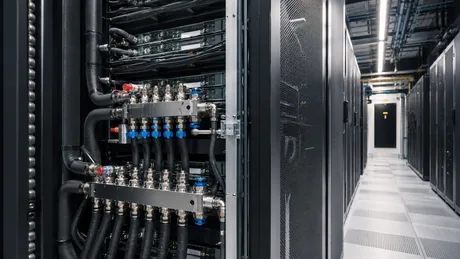
Liquid cooling stopped being an option and became a requirement, bringing failure modes a conventional facility never had: leak detection, coolant chemistry, pressure regulation, flow balancing, thermal expansion across hundreds of quick-disconnect couplings. None of it is caught by visual inspection or standard functional testing.

“Extreme density is the other half, and it arrives largely through liquid cooling, because 200kW-plus racks can’t be handled with air.”Louis Charlton · GCV Group
Chapter 06
And proof ran out of runway

You cannot prove the thermal behaviour until the accelerators are running.

A loop can be pressure-tested and flow-balanced in isolation, pass every pre-load test, and still behave differently once real compute is on it. That is a verification gap conventional infrastructure does not have, and it sits precisely where the schedule has the least room left.

“You can pressure-test and flow-balance the loops in isolation and pass every pre-load test, and still see performance issues once real compute load is on.”Louis Charlton · GCV Group
Chapter 07
The method did not move

The buildings changed. The way we prove them did not.

Every step above pushed the assurance boundary outward, upstream into the energy chain and downstream into live operation, while removing the slack the old sequence depended on. The industry still largely buys verification as a service near the end. Charlton’s argument is that it has to be drawn as a line under the whole thing instead.

“The old model draws that line as a dot at the end. The reality of what’s being built now needs it drawn across the whole page.”Louis Charlton · GCV Group

Thirteen pieces of evidence on the gap.

Pattern board · ASR-Q4
Compiled July 2026
Verified Testimony
The evidence
What does proven actually require?
Five failure patterns and eight findings, from a verifier who sees them repeat.
P01
The design-stage problem, found when change costs the most.
Testimony
Open
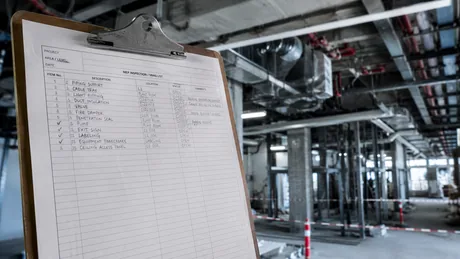
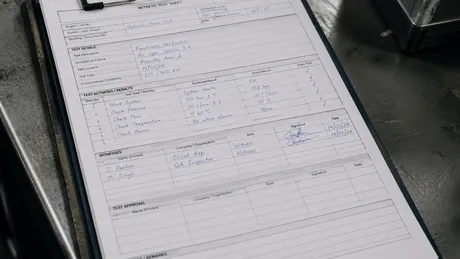
Witness test sheet, part-signed
P02
The evidence pack assembled backwards.
Testimony
Open
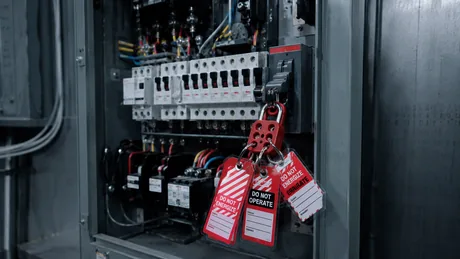
Panel tagged at energisation
P03
The safety exposure at energisation.
Testimony
Open
MEP snag list at handover
P04
Residual items handed over without their consequence.
Testimony
Open
P05
The one that unfolds slowly, after everyone has gone.
Testimony
Open
Complete, not yet proven
C01
Complete is a construction status. Proven is an assurance status.
Testimony
Open
Commissioning authority on site
C02
Appointing the commissioning authority after the design is finished is a closeout, not commissioning.
Testimony
Open
C03
Risk does not accumulate inside the phases. It accumulates at the joins between them.
Testimony
Open
High voltage, now the long pole
C04
Grid scarcity has turned high voltage from the utility’s problem into the operator’s asset.
VerifiedTestimony
Open
Liquid cooling above 200kW
C05
Above roughly 200kW a rack cannot be air-cooled, and liquid cooling cannot be fully proven until the GPUs are running.
VerifiedTestimony
Open
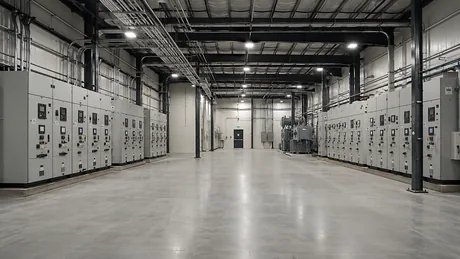
Switchgear hall awaiting witness
C06
The commissioning capacity crunch will not be solved by hiring more engineers.
Testimony
Open
The regulated-industry parallel
C07
Aviation, nuclear, oil and gas and pharmaceuticals resolved the in-life verification question decades ago.
VerifiedTestimony
Open
C08
The value of verification collapses at the moment the verifier has an interest in the result.
Testimony
Open

The four-tier taxonomy grades claims about the world; most of this board is professional judgement from a practitioner, so it is marked Testimony rather than graded. Where the report’s own research corroborates a finding it is also marked Verified. Charlton declined to give incident-level accounts, so the patterns are categories he says recur rather than identified projects. Quoted passages are reproduced from his written submission.

He declined to give incidents. The record gives numbers.

Charlton would not describe identified projects, and said the telling failures are quiet ones. The published record supports the category without needing his cases: the dominant cause of data-centre outages is not equipment, it is procedure, and the cost of it is rising faster than the frequency.

Verified01

Procedure, not judgement

85% of human-error outages

Uptime attributes 85% of human-error outages to staff not following procedures, or to flaws in the procedures themselves. The failure is in the method, not the operator.

2025 · Uptime Institute
Verified02

And it is getting worse

48 → 58% in one year

The share of human-error outages caused by failure to follow procedures rose ten points between the 2024 and 2025 analyses.

2024 → 2025 · Uptime Institute
Estimated03

The dominant cause, over 25 years

2/3–4/5of all outages

Across a quarter century of tracking, Uptime estimates human error plays a role in two-thirds to four-fifths of all outages. Power remains the largest single technical cause.

25-year series · Uptime Institute
Verified04

The cost of getting it wrong

39 → 60% above USD 100k

Outages costing more than one hundred thousand dollars rose from 39% to over 60% of the total in three years. Those above a million rose from 11% to 15%.

2019 → 2022 · Uptime Institute
Estimated05

The market is already pricing it

10.6 → 24.2USD bn premiums

Swiss Re projects data-centre-linked premiums to more than double by 2030, and describes a sector scaling faster than prescriptive regulation exists to govern it.

2026 → 2030 · Swiss Re Institute
Verified06

Certification exists, and is optional

4,300+ awards, 120 countries

Uptime has issued over 4,300 Tier awards across design, constructed facility and operations. All three are voluntary and commercial, and the operational tier expires.

to 2026 · Uptime Institute

Uptime Institute Annual Outage Analysis (2022, 2024, 2025) and 25-year commentary; Swiss Re Institute sigma 07/2026. A widely repeated figure holds that 79% of outages involve components not directly tested at commissioning; it is attributed to Uptime in the commissioning-vendor literature but is not traceable to a published Uptime report, so it is not used here.

Where the other sectors wrote it down.

Charlton’s comparison is that aviation, nuclear, oil and gas and pharmaceuticals settled this question decades ago, and his own commissioning career was in oil and gas, so it is not an analogy borrowed from outside. Each of those regimes has a place as well as a date. They are plotted here where they were written. Select any node.

Piper AlphaONR · MerseysideEASA · CologneEMA · AmsterdamIEC · Geneva
Five regimes plotted on their true coordinates
Oil and gas · offshore verification

Piper Alpha, and the regime that followed

1992, recast 2015

One hundred and sixty-seven men died on Piper Alpha in July 1988. Lord Cullen’s inquiry produced 106 recommendations and moved offshore safety oversight to the HSE. The regime that emerged requires an Independent Competent Person to verify that safety and environmentally-critical elements remain in good repair, and Regulation 13(1) requires that scheme to be reviewed throughout the lifecycle of the installation. The duty sits with the operator.

MandatoryYes
Through lifeYes, explicit in statute
Duty holderOperator
InstrumentSI 2015/398
Source · legislation.gov.uk SI 2015/398; HSE offshore verification guidance

In every regime above, independent verification is mandatory, runs through the operating life rather than ending at handover, and the duty is carried by the operator. No equivalent exists for data centres. What does exist is set out next.

What already covers a data centre.

A data centre is not unregulated. Six instruments reach it, and between them they cover energy, construction safety, live electrical working, resilience and independent testing for those who buy it. Each is set out here claim by claim, graded against the record. Select a tab to bring an instrument forward, an underlined claim to read the analysis, or filter by grade.

Instrument ·   · marked by Entelligencia
Filter
What is left over

Read together these instruments verify energy, safety and resilience. Independent proof that the facility performs as designed under load appears in exactly one of them, and it is voluntary, commercial and point in time. None carries the feature every regime on the map above shares: a mandatory duty on the operator to keep proving the asset across its working life.

The last word

Complete, or proven

Louis Charlton
GCV Group · Louis Charlton

“The line I keep coming back to is that complete and proven are not the same thing.”

“Complete is a construction status. Proven is an assurance status, and only one of them tells you the building will do what it was designed to do when it’s carrying a live load. As an industry we’ve been comfortable using those words interchangeably, and the gap between them is where the risk sits.”

“You control risk where it is created, you keep control of it across every seam, and you don’t let go of it at handover, because the asset carries on running for fifteen or twenty years after the project team has gone home. The old model draws that line as a dot at the end. The reality of what’s being built now needs it drawn across the whole page.”

“Anyone can be independent when it’s easy. Our clients aren’t paying us to agree with them on the good days. They’re paying us to be the one party in the room who will still tell them the truth on the bad ones.”

Contributed to The Next Hotspot via the Entelligencia briefing survey, attributed by name with firm and title at the contributor’s request. Passages reproduced from his written submission. Framing, data and editorial selection are Entelligencia’s.

The Next Hotspot · dropping
Entelligencia

One case down. The map is next.

Mind the Gap is a Sociogencia case inside The Next Hotspot, an interactive read on where the world actually builds AI infrastructure. The full edition is live, and the remaining drops are dated below.

Live now · SociogenciaOriginal analysis is dropping already. Read the studies.Read the studies →

Get each drop as it lands
One email per release: original analysis, the market chapters, the full report. No noise.

EntelligenciaThe Next Hotspot