




record
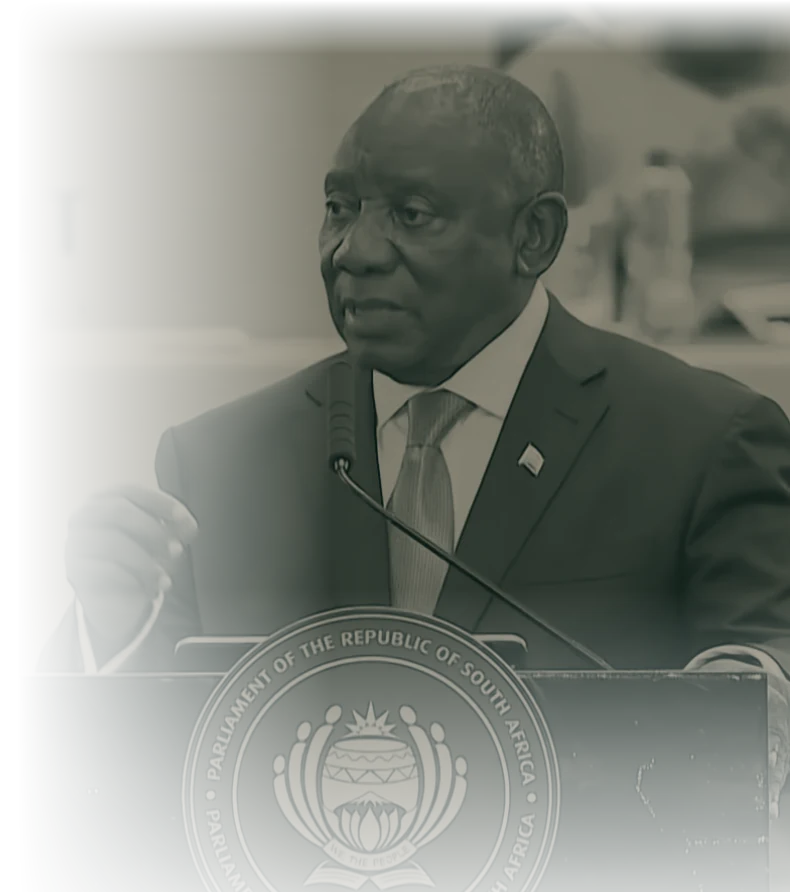
He called it a reservoir. This chapter asks what fills it. South Africa has the deepest data-centre market in Africa. What it does not yet have is dependable power, and the operators winning here are the ones who stopped waiting for the public grid.
Reservoir framing: Ramaphosa, State of the Nation Address, 2025. Binding constraint, on Entelligencia's reading: power reliability.
The market is the deepest in Africa. The constraint is not capital, land, or skills. It is power you can depend on.
South Africa enters 2026 as the continent's anchor data-centre market: around 56 facilities, roughly 40% of Africa's data centres, and by power the majority of the continent's operational capacity. The market is valued at USD 2.55 billion in 2025 and is projected to roughly double to USD 5.28 billion by 2031. AWS and Microsoft Azure run cloud regions in the country; Google has announced a Johannesburg cloud region, with no firm launch date. The cable landings, the skills base, and the hyperscaler presence are real and verifiable.
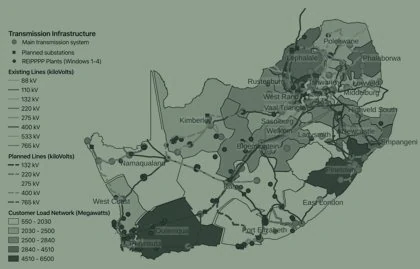
The story of the last decade was load-shedding. By mid-2026 that story has eased: the country is approaching a year without rolling blackouts. But the binding constraint has not disappeared, it has moved. It is now reliability and price. Energy alone exceeds USD 1.2 million per facility per year, a load-shedding risk premium still adds about USD 20 per MWh over the Johor equivalent, and the next limit is transmission capacity, not generation. Utilisation already runs above 83% and is projected past 94% by 2030.
The thesis for the chapter is this: the operators winning in South Africa are the ones who stopped waiting for the public grid and started building their own. Teraco owns a 120 MW solar plant and wheels wind from NOA to its halls. Equinix is funding 160 MW of new capacity off its own balance sheet. The government has now placed data centres on the same tier as energy and ports. The reform that decides the next decade is not generation, it is whether transmission and the new wheeling market can scale fast enough. The operators who have already decoupled, verified below, will define which share of the announced pipeline becomes real.
Each spoke is one precondition, scored 0 to 10 for like-for-like reading – indicative editorial weighting, not a published index. Select any spoke or row to read the factor.
Transmission has to release grid capacity faster than demand grows. Wheeling tariffs and rules have to stay stable enough for operators to underwrite twenty-year PPAs. And the new market has to be independent enough that a self-supplying operator is not competing against its own grid host. South Africa's pipeline is not constrained by capital, land, or skills. It is constrained by dependable power and the grid that moves it. The operators who built their own supply early have bought themselves time. The rest are waiting on a reform that is announced, partial, and disputed.
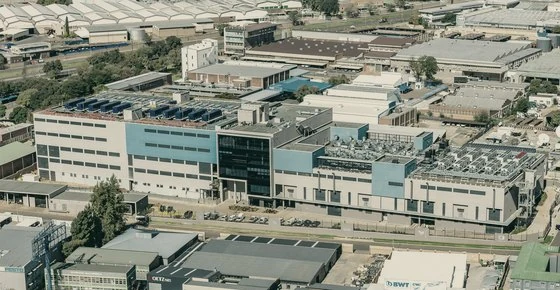
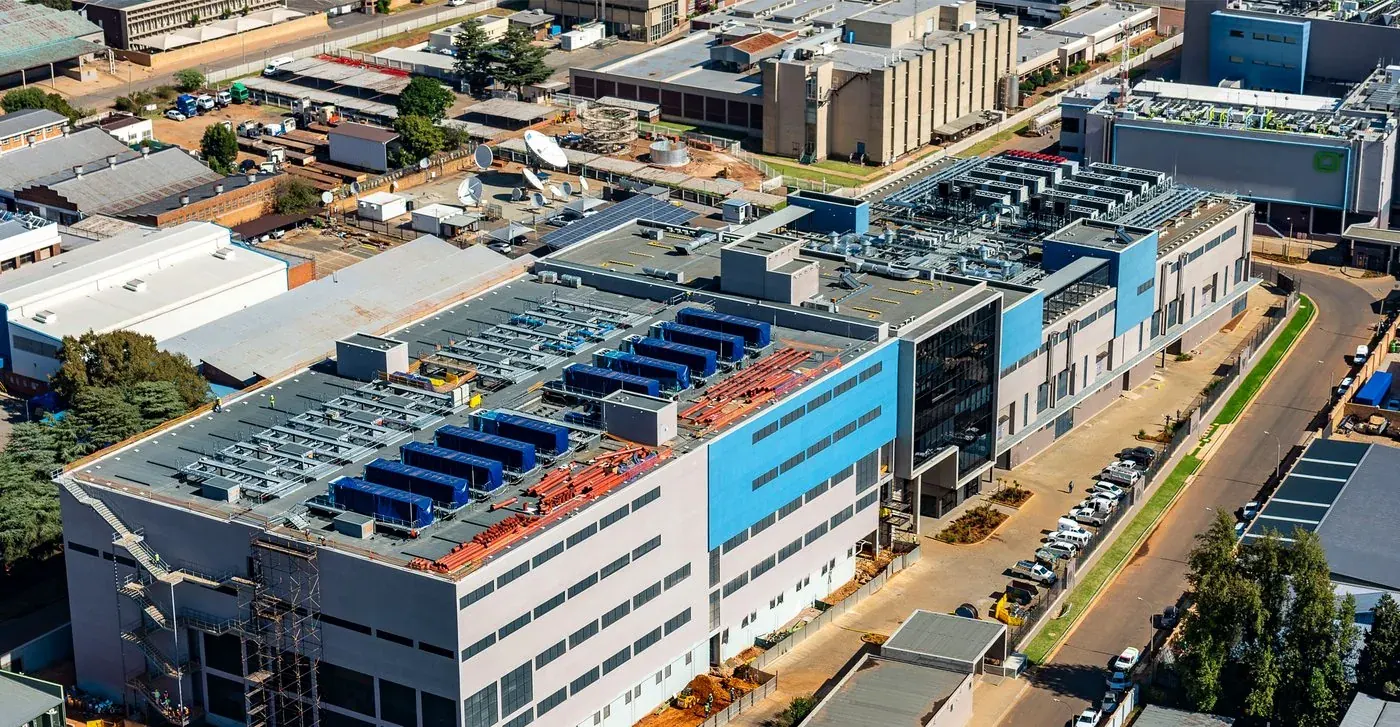
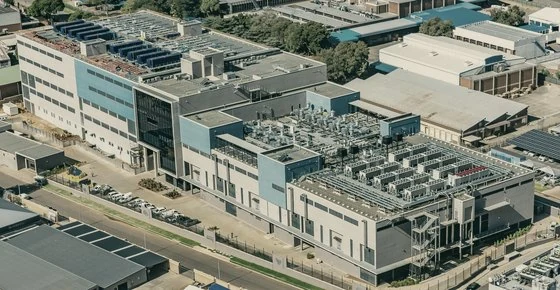
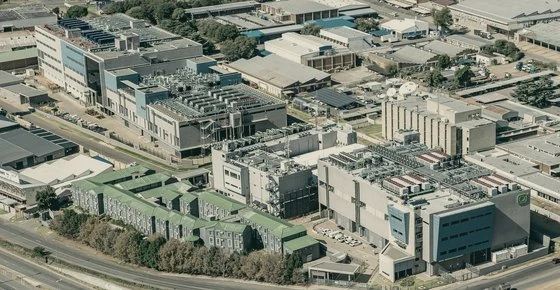
A live data-centre campus in the Isando and Kempton Park industrial node on Johannesburg's East Rand, inside the City of Ekurhuleni. Gold markers are plant: how the building makes cold and takes power. Blue markers are the site and its location. Every reading off the image is a visual inference, phrased as what the picture is consistent with, not a confirmed system specification.


Wheeling is how a Johannesburg data centre buys power from a wind or solar plant hundreds of kilometres away: the energy is fed into the grid at one point and credited at another. It takes a web of contracts, and it runs on a real, NERSA-approved Eskom tariff. Neither makes the public grid go away.
A generator's power is fed into the grid at one node and the off-taker is credited for it at another, less what it draws. The off-taker stays a grid customer throughout. Projects up to 100 MW need only NERSA registration, not a licence: the rule change that made operator self-supply practical.
WEPS active energy, nearest transmission zone, high-demand season, incl VAT. High season runs 1 June to 31 August; peak energy is roughly six times off-peak, which is what makes the time and place of generation matter.
Four transmission zones; loss factors and network charges differ by zone, so distance between plant and hall is priced in.
A stack of the primary documents behind the power question, each graded claim by claim. Click a tab to bring a document forward, click any underlined claim to see the read, or filter by grade. These are annotated representations of each source.
Four primary documents in the file. Click a tab to bring one forward.
Self-supply works only if the rules underneath it hold. The wheeling framework, the April 2026 wholesale-market opening, and the status of the national transmission company together determine whether an operator can underwrite a twenty-year renewable power purchase agreement.
In our reading, the operators converting announced megawatts into contracted capacity are those that structure for regulatory change early, rather than waiting for certainty that a transition of this scale is unlikely to provide. The legal questions, grid access, wheeling tariffs, and the public-private partnership rules now applied to digital infrastructure, are where the next phase will be decided.
Partner content, prepared in partnership with the named firm and presented separately from the editorial. The firm shown is a fictitious placeholder for the co-published format; a real partner and approved copy would replace it before publication. The findings and analysis elsewhere in this chapter are produced independently by Entelligencia.
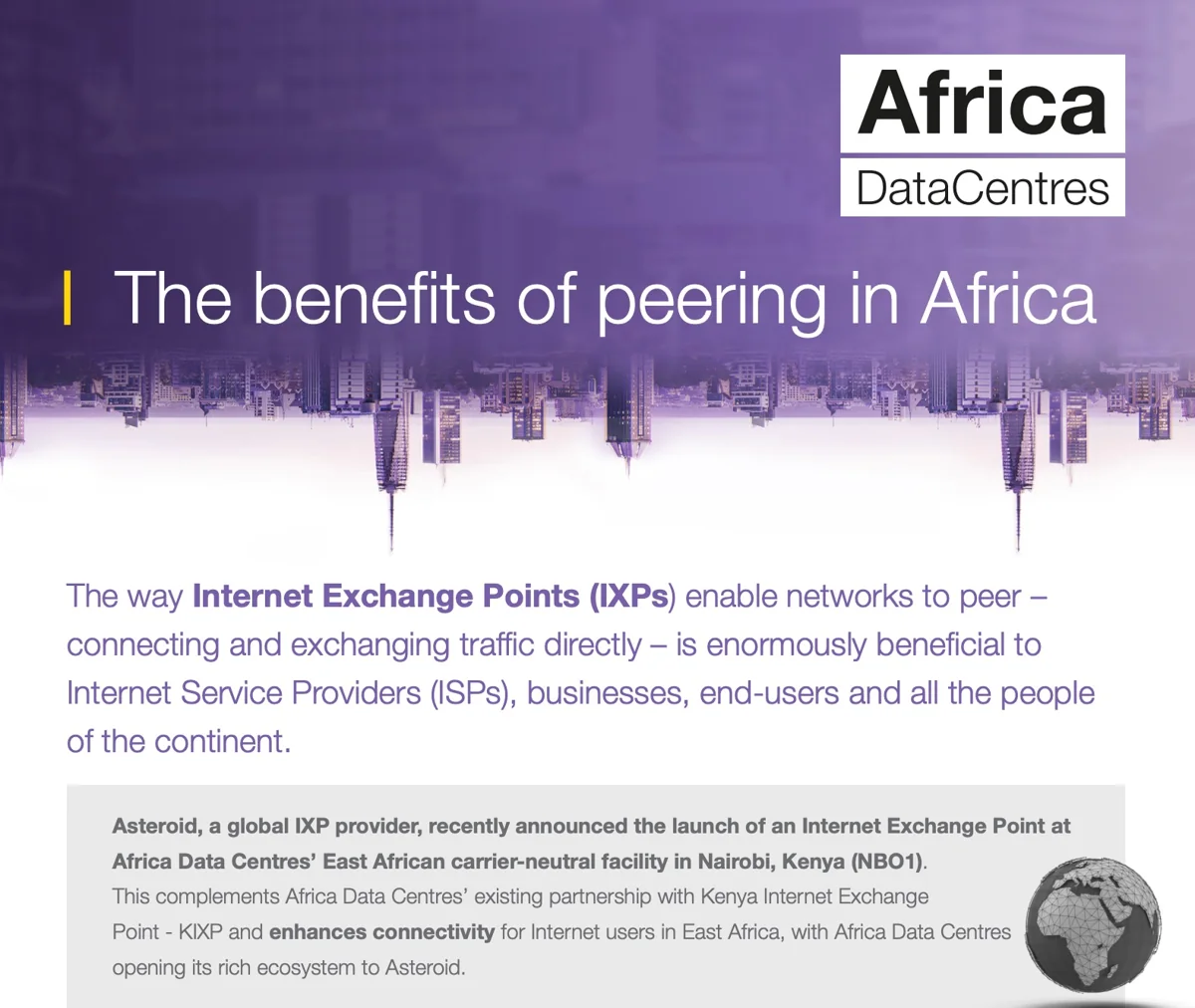
Africa Data Centres sets out why Internet Exchange Points matter for the continent: peering lets networks connect and exchange traffic directly, cutting cost and latency for internet service providers, businesses and end-users.
The paper highlights Asteroid, a global IXP provider, launching an Internet Exchange Point at the carrier-neutral NBO1 facility in Nairobi. It complements the existing Kenya Internet Exchange Point partnership and opens the Africa Data Centres ecosystem to a wider peering community across East Africa.
Partner content, supplied by Africa Data Centres and presented separately from the editorial. The findings and analysis elsewhere in this chapter are produced independently by Entelligencia.
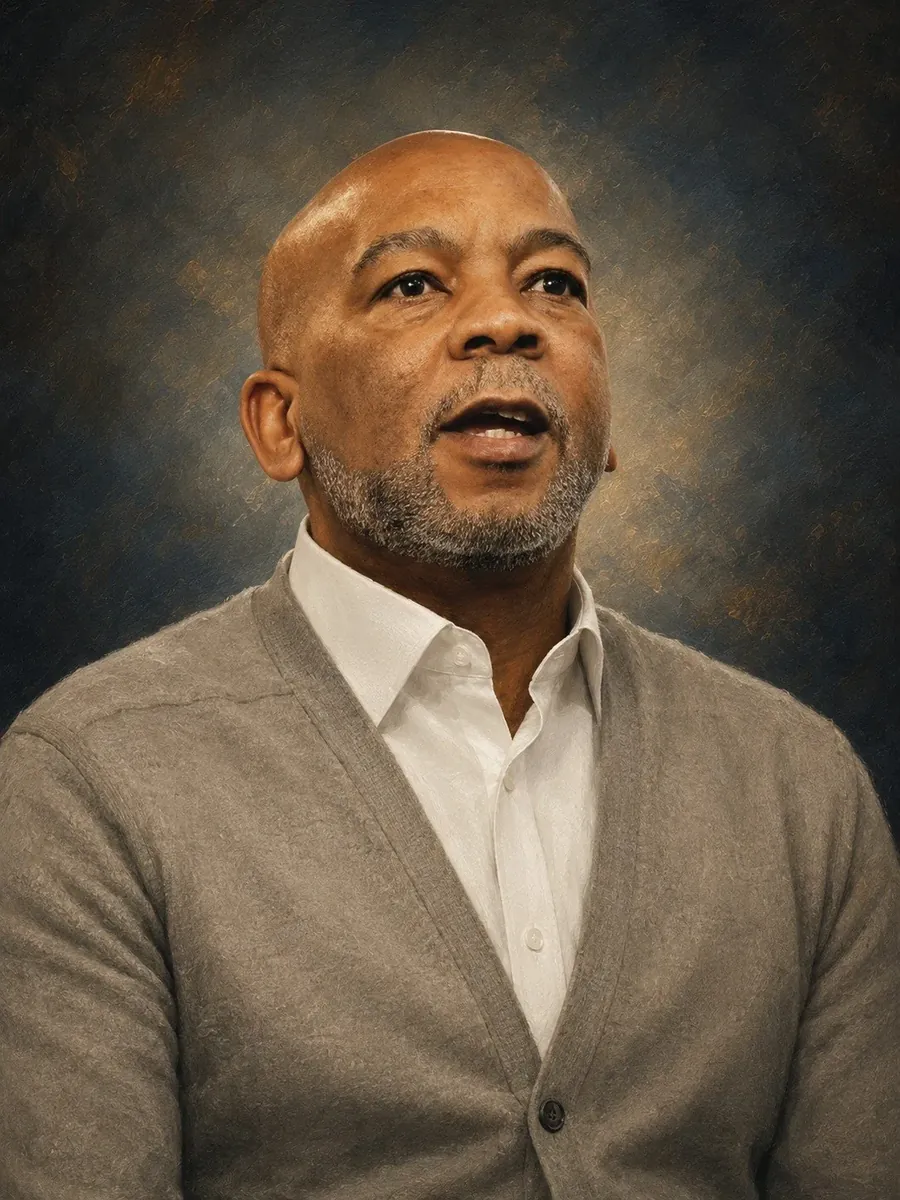
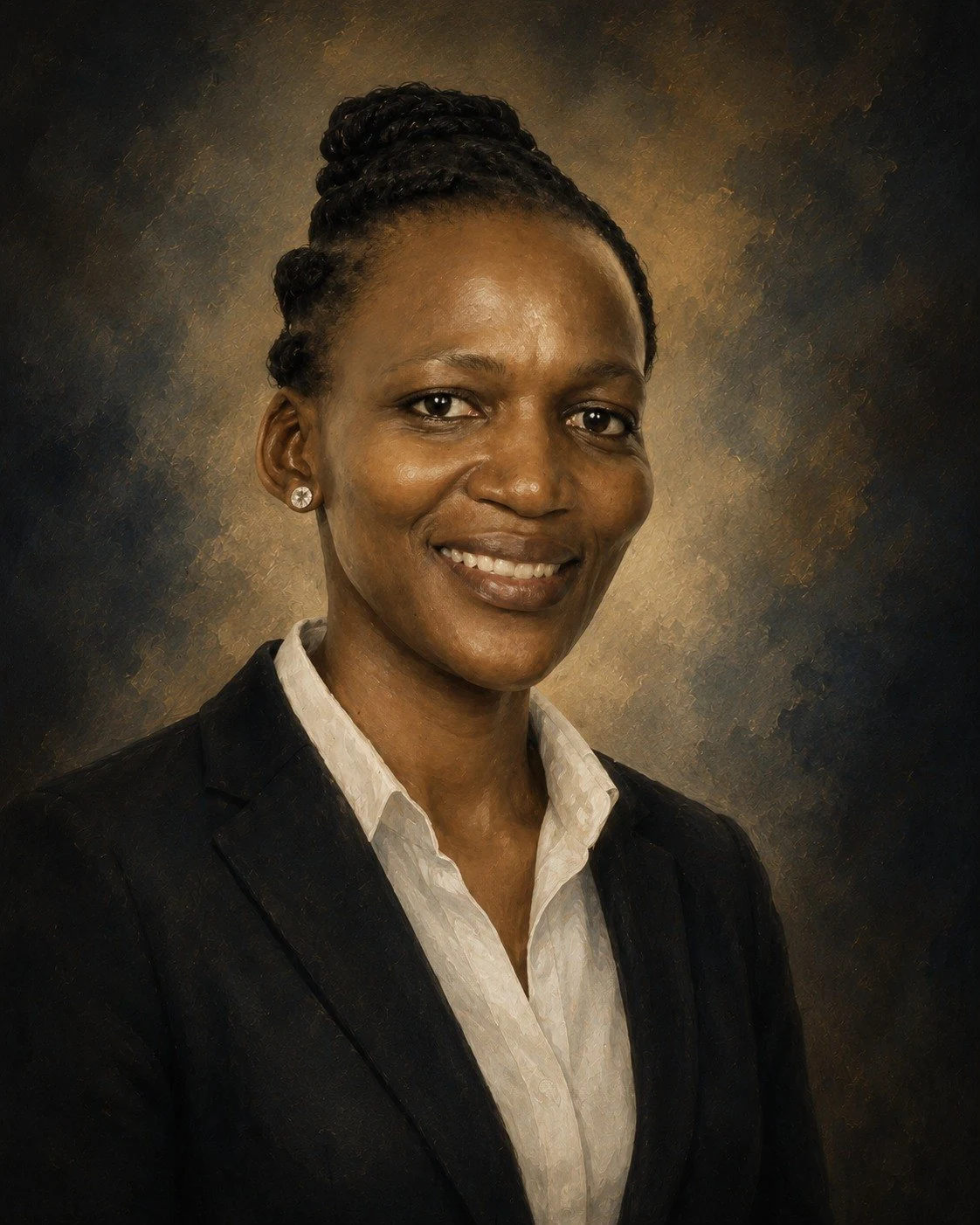
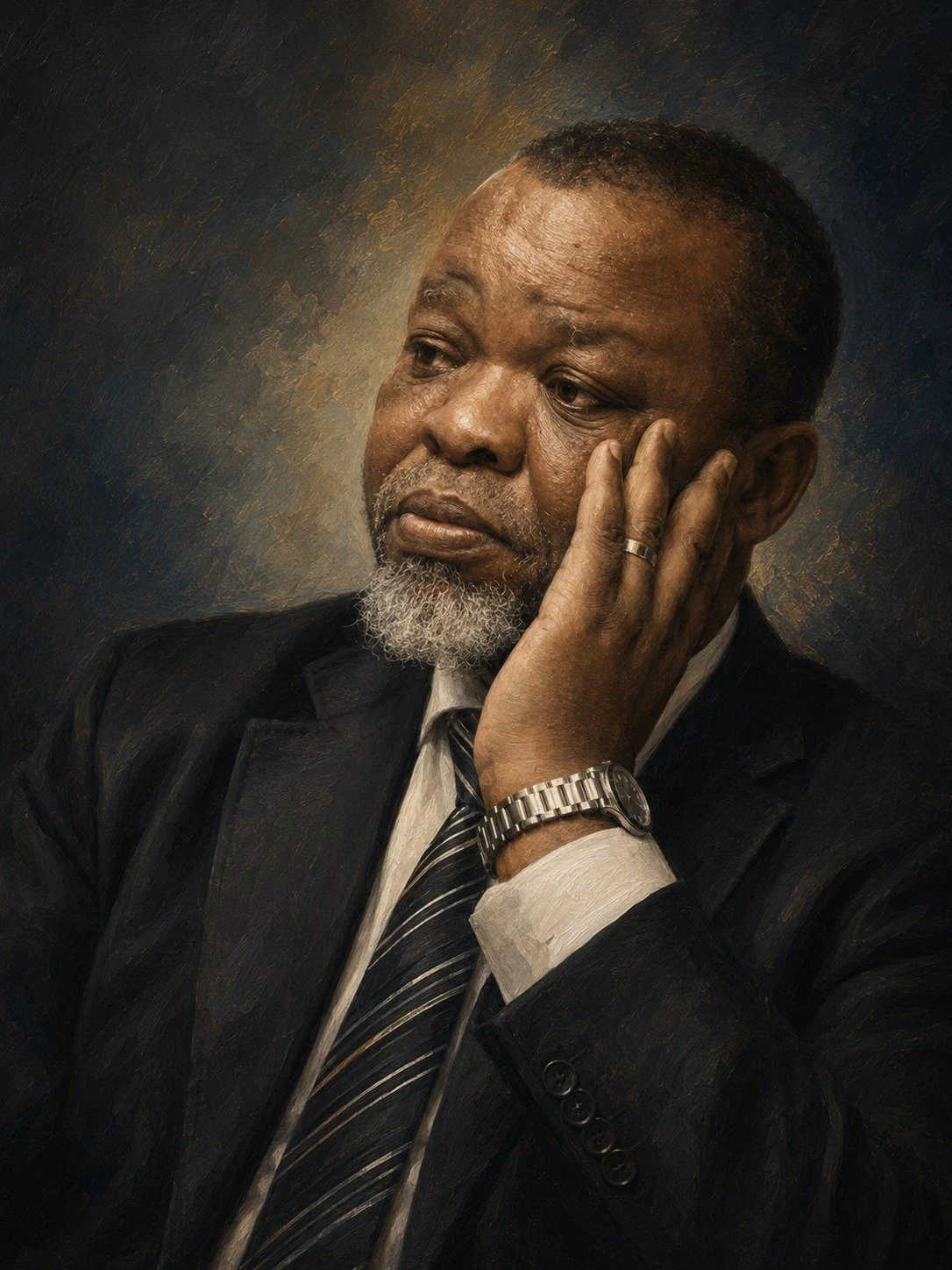
Four named figures across operator, capital, energy and hyperscaler roles, each with a real role and an on-record line. Portraits are press and supplied stills, toned for the page and shown for evaluation, subject to licensing before publication. One profile (Microsoft) should be re-pointed to the named successor once Microsoft confirms its dedicated South Africa managing director. Hover or tap a card.


Capital and suppliers feed the power layer and the operators, who in turn anchor the hyperscalers and enterprise demand. The South African signature is the power column: Eskom plus the wheeled renewables and municipalities that operators increasingly route around. Hover any node to trace its links, click for the brief.
05 tiers · 25 entitiesLogos are real brand assets shown for evaluation, subject to licensing or permission before any sponsor or commercial use; no recreations. Solar and wind IPPs and wheeling municipalities are category groupings, shown as text nodes. The connecting lines are documented commercial and operational relationships, drawn from public filings and operator statements; they indicate direction of supply or ownership, not exclusivity, and several enterprise links are illustrative of where demand sits rather than a named contract.
Three industry voices on the supply chain, each opening a pop-out that can carry a voice clip, an interview, an opinion with exhibits, or a simple quote. Placeholder cards for now; real names, photos and content to follow.
[Placeholder] A short clip will sit here – one quotable observation on the supply chain, with the transcript below.
[Placeholder transcript. Replace with the speaker’s own words once the clip is recorded.]
[Placeholder] A short standfirst introducing the conversation and why this voice matters here.
[Placeholder] First question on the supply chain.
[Placeholder] Reply. Replace with the interview transcript.
[Placeholder] Follow-up question.
[Placeholder] Reply.
[Placeholder] Opening argument of the contributed piece.
[Placeholder] The point the exhibit is brought in to support.
[Placeholder] Closing line, and what it means for the read.
Placeholder module · voices, photos and content to be added chapter by chapter.